From Bus Depot to Purple Rain: The Complete History of Minneapolis’ Legendary First Avenue
Some venues host concerts.
Some venues host scenes.
And then there are places like First Avenue — buildings that somehow evolve into cultural landmarks so important that they stop feeling like ordinary venues at all. For generations of musicians and fans, First Avenue became more than a room with a stage. It became mythology. It became a proving ground. It became part of the identity of Minneapolis itself. And for many artists, walking through its doors meant stepping into a place where music history already lived in the walls.
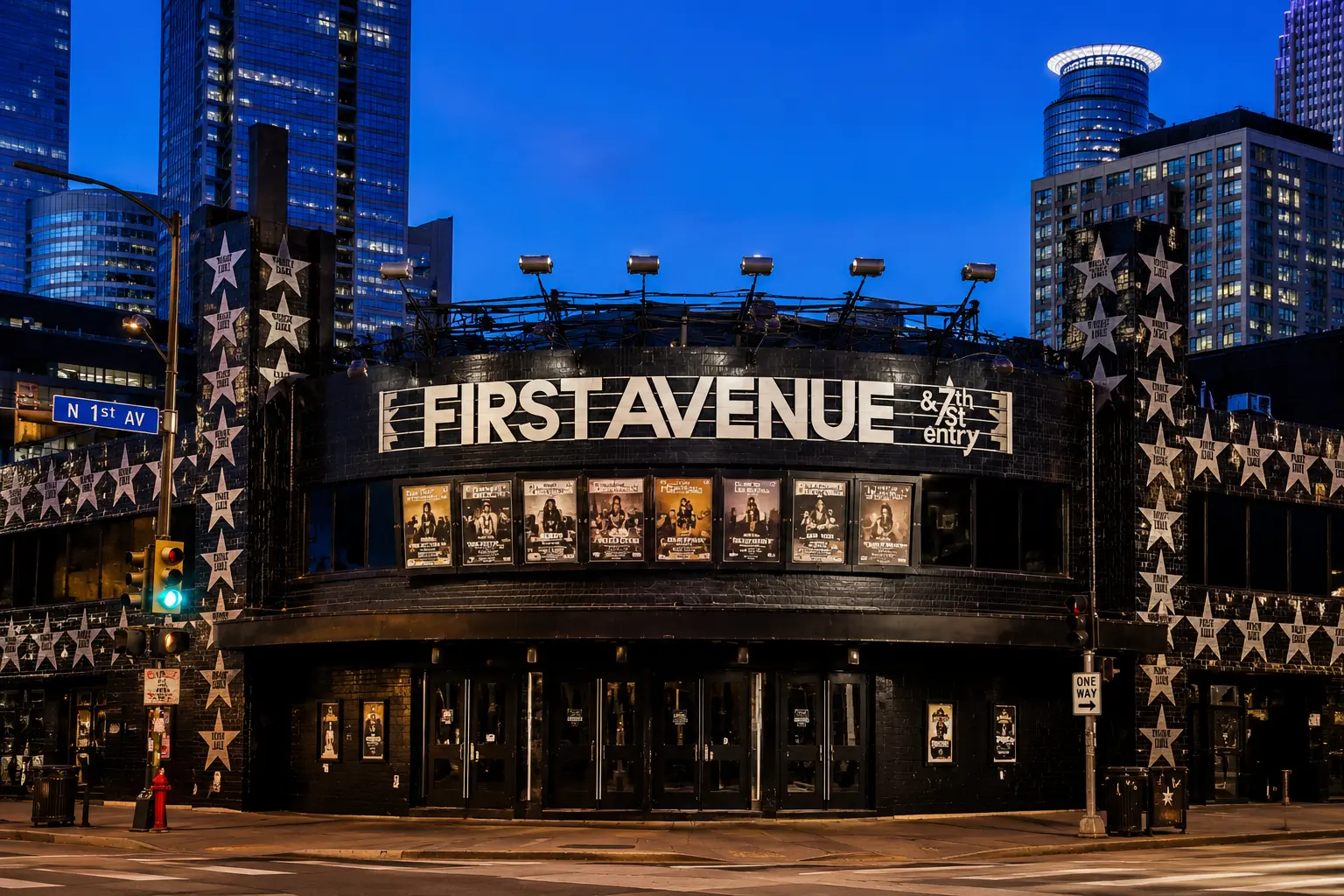
Long before amplifiers rattled its ceilings and crowds packed its dance floors, however, the building lived an entirely different life. The structure sitting at the corner of First Avenue North and Seventh Street began as a Greyhound bus terminal built in 1937. Thousands of travelers moved through the building over decades as buses arrived and departed downtown Minneapolis. For over thirty years, it functioned as transportation infrastructure rather than entertainment history. Nobody standing there in the 1940s or 1950s could have predicted that one day it would become one of America's most important music venues.
That transformation began after the Greyhound operation moved elsewhere in the late 1960s. Entrepreneur Allan Fingerhut purchased the building and converted it into a music venue called The Depot in 1970. The first major concert reportedly featured Joe Cocker and the Mad Dogs & Englishmen tour. Suddenly the former transportation hub had become a live entertainment destination. But the building would continue evolving. During the disco explosion of the early 1970s, the venue transformed into a club called Uncle Sam's, complete with patriotic décor and dance-floor energy reflecting the era's changing tastes. As disco popularity eventually cooled, ownership shifted again and the venue underwent additional reinventions.
By the early 1980s, the venue officially became First Avenue — and that is where history really began accelerating. Minneapolis had quietly developed a thriving local music ecosystem filled with ambitious musicians, underground acts, and artists searching for a place to grow. First Avenue became the center of that universe. Local bands suddenly found themselves sharing stages with national acts. Punk, funk, rock, alternative music, dance nights, contests, and emerging genres all collided under one roof. Unlike venues that focused narrowly on one audience, First Avenue developed a reputation for embracing experimentation and unpredictability.
Then came the artist most closely tied to the venue forever: Prince.
It is nearly impossible to tell the story of First Avenue without Prince appearing almost immediately. While Minneapolis already possessed a growing music scene, Prince transformed it into something internationally visible. First Avenue became one of his preferred stages and eventually one of the central visual locations associated with his rise. The venue achieved worldwide fame through the 1984 film Purple Rain, which used First Avenue as its primary setting. Although portions were recreated elsewhere, audiences around the world suddenly saw the venue and connected it directly to Prince mythology. Overnight, First Avenue stopped being just a Minneapolis venue. It became iconic.
After Purple Rain, the club entered another level entirely. National attention exploded. Touring artists increasingly viewed First Avenue as a destination rather than merely another stop on a schedule. Over the decades, countless artists walked through its doors. Names from rock, hip-hop, punk, indie, alternative, metal, and electronic music eventually filled the venue's famous exterior stars. Those stars — hundreds covering the building's outside walls — became one of the venue's most recognizable features. Artists who played the club earned permanent recognition. Following Prince's death in 2016, local artists quietly transformed his star into gold, where it remains today.
One of the venue's hidden strengths came from its dual identity. Alongside the larger Mainroom sits the smaller 7th St Entry, a more intimate room that became legendary itself. While First Avenue hosted larger acts, 7th St Entry developed a reputation as a launching pad where emerging artists could build followings before graduating to bigger stages. Generations of Minneapolis musicians came through The Entry before moving onward. The Mainroom eventually hosted hundreds of annual concerts while The Entry became a beloved institution for discovering new music.
Perhaps what makes First Avenue remarkable is survival itself. Music scenes collapse constantly. Venues disappear. Trends fade. Entire genres rise and vanish. Yet First Avenue somehow moved through disco, punk, funk, alternative rock, hip-hop, grunge, digital music, streaming, and modern concert culture while remaining relevant. It adapted without losing its identity. Few American venues can make similar claims. Writers and music historians have compared its cultural significance to clubs like CBGB and the 9:30 Club because of its role in shaping local and national music history.
Today First Avenue stands as something larger than a concert venue. It feels almost like a living museum disguised as a nightclub. New artists still walk onto its stages while standing in the shadows of decades of history. Fans still look up at the stars outside the building. Musicians still dream about eventually earning one of their own.
And perhaps that says everything.
Because while buildings age, true music institutions rarely disappear.
They simply keep making history.