Gazas Oud Repairman Preserves Cultural Heritage Amid War
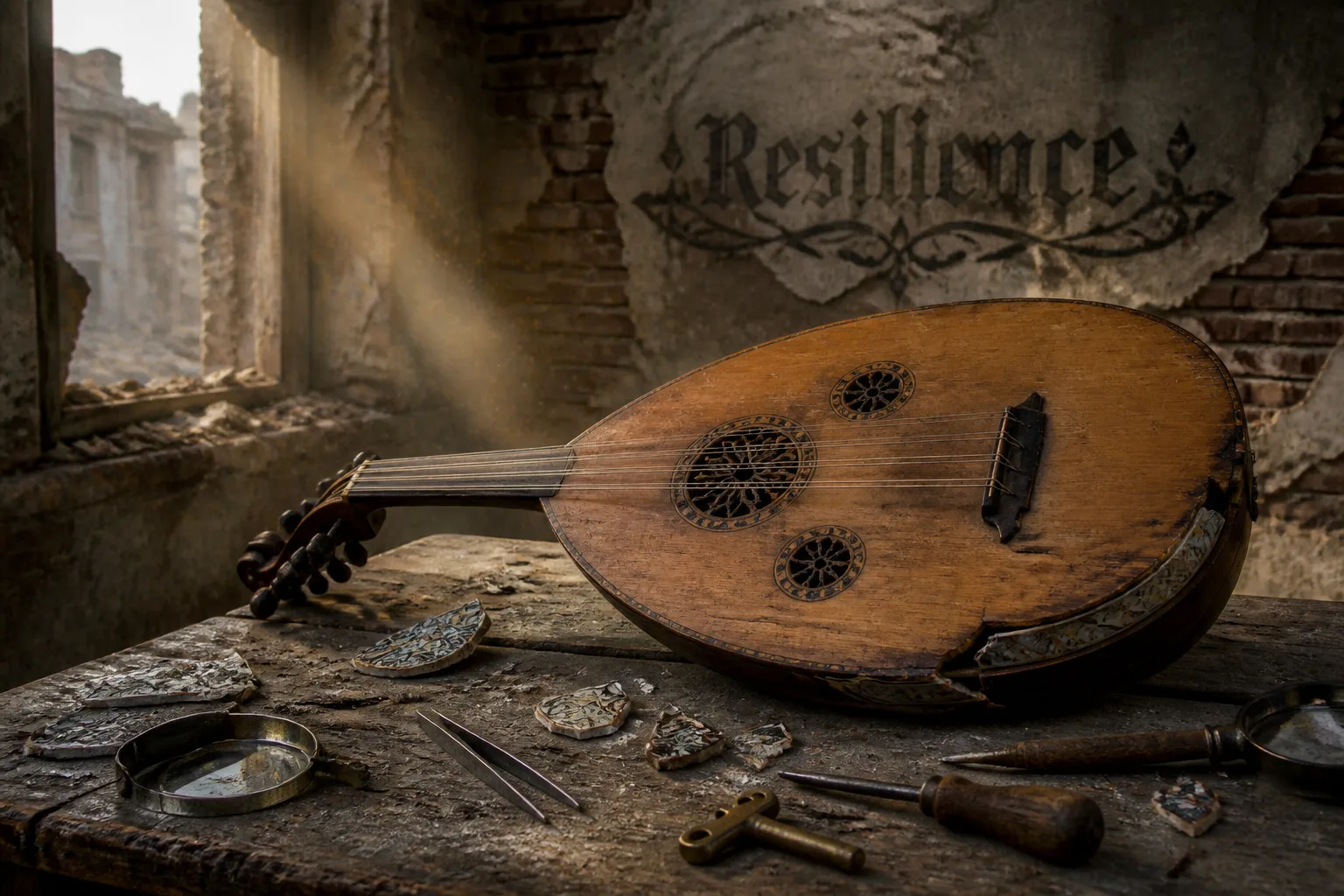
In the heart of Nuseirat, a 60‑year‑old craftsman keeps a fragile heartbeat alive: the oud. Inside a makeshift workshop that sits amid wooden pallets, torn aid crates and shattered strings, Suhail Abu Shawish restores instruments that echo through the rubble of war.
The cramped space, surrounded by the detritus of a community under siege, is a quiet sanctuary. The soft, resonant tones of a repaired oud drift through the air, a stark contrast to the distant clang of shelling. Abu Shawish’s hands move with practiced care, a testament to years of training and an unyielding commitment to his craft.
Abu Shawish first learned the oud in the 1980s, then spent years working with several institutions where he honed his expertise in conservation and restoration. After the Gaza war forced him to flee to Rafah, he returned to his hometown of Nuseirat and set up a repair shop in a space that offers no proper facilities, no steady supply of materials, and frequent power outages. He relies almost entirely on hand tools—saw, file, and a stick of glue that he applies by hand.
The instruments that arrive are often battered by shelling. Young customers bring damaged ouds, violins, guitars and other stringed instruments wrapped in black plastic bags. Abu Shawish disassembles each piece, salvaging usable parts and re‑gluing shattered sections that many would deem beyond repair.
"Despite the shortage of wood and its high prices, they turn to me," he told AFP. "Despite the hardship of war, we continue to work."
The scarcity of suitable timber is a major hurdle. Import restrictions and the blockade of Gaza make traditional oud‑making wood nearly impossible to obtain. Abu Shawish now scavenges lumber from discarded food‑aid crates and uses damaged instruments as replacement parts.
The cost of essential supplies has risen sharply. Glue that once cost 20 shekels (about $6.70) now sells for around 60 shekels, and the price of thinner has increased dramatically. With electricity largely unavailable, the craftsman must work manually, and the additional labor time required for each repair makes the process even more demanding.
On the walls of the workshop hang several restored instruments, bright and shining. They serve as symbols of resilience, music, and craftsmanship in the shadow of war. Abu Shawish hopes that one day he can manufacture high‑quality Palestinian instruments that can compete internationally and showcase Gaza’s craftsmanship to the world.
"We hope conditions improve and they will allow us to import wood, glue and other materials," he said. "We want to work like the rest of the world, compete globally, and start manufacturing products that we can proudly say are Palestinian‑made and made in Gaza."
Nuseirat camp, established after the 1948 Palestinian expulsion, lies five kilometres northeast of Deir al‑Balah in the Deir al‑Balah Governorate. According to the Palestinian Central Bureau of Statistics, the camp had a population of 31,747 in 2017. The Gaza Strip has been under blockade since 2007, leading to shortages of goods, high prices and limited electricity.
Abu Shawish’s work is a small but significant act of cultural preservation. Amid the ongoing economic and humanitarian crisis in Gaza, his workshop keeps alive a key element of Palestinian cultural identity. The restored instruments provide not only sound but also a reminder that art and craft can endure even in the most challenging circumstances.
The current situation remains difficult. Material shortages, high costs and power outages continue to constrain the repair work. Abu Shawish’s future plans hinge on improvements to Gaza’s import conditions and infrastructure.