Domestic K-Pop Charts Lag Behind Global Trends as Local Streaming Services Struggle
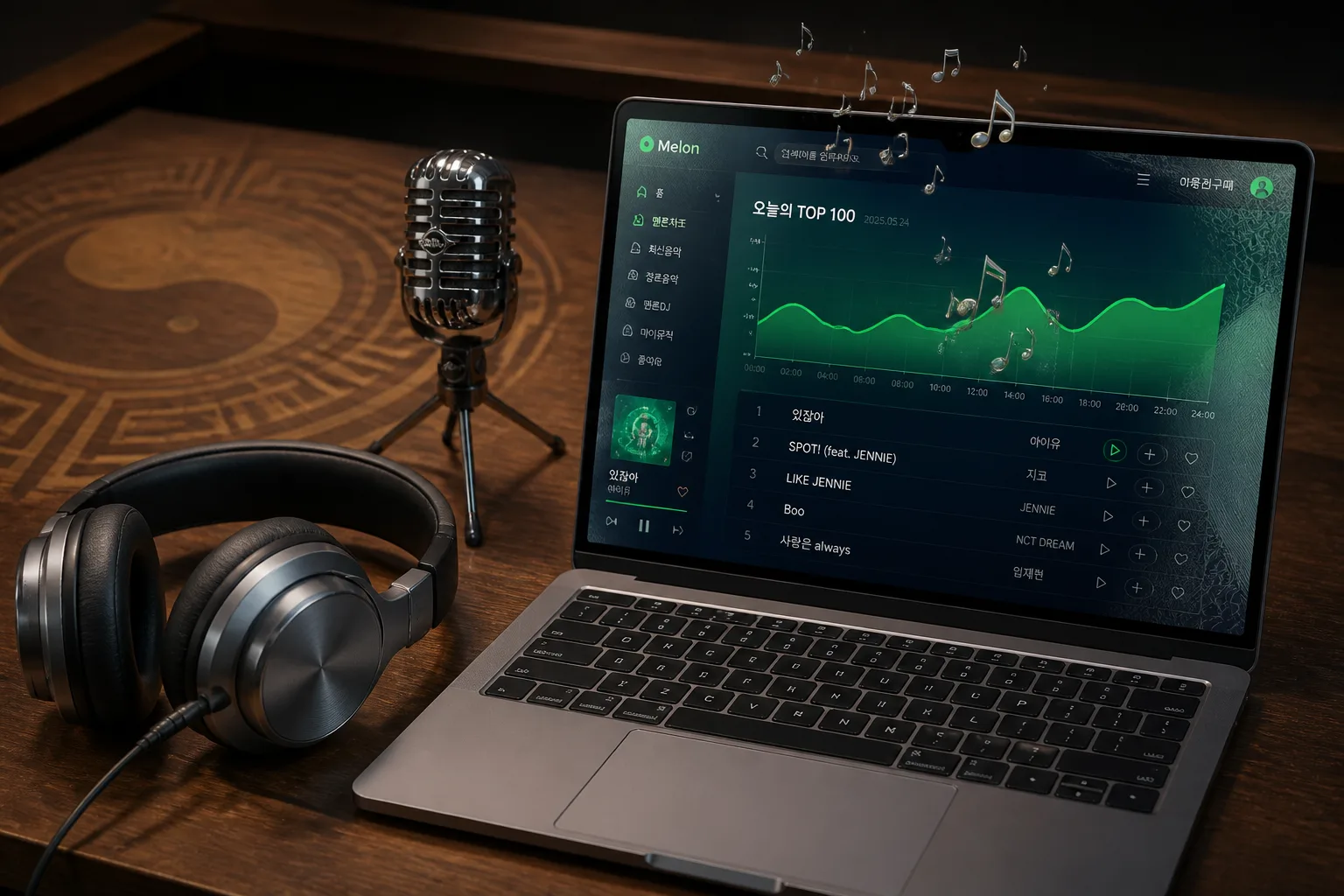
When a K‑Pop track climbs to the top of Spotify’s Korean chart, it’s often still a distant dream for the domestic Melon leaderboard. The gap has grown this year, with South Korea’s leading local platforms failing to mirror the real‑time popularity that overseas services capture.
Financial data from 2025 show that the Big Four entertainment giants—HYBE, SM Entertainment, JYP Entertainment and YG Entertainment—derive 60 % of their revenue from overseas markets, yet local streaming services such as Melon, Genie Music, FLO and Bugs contribute only marginally to that stream. Genie Music’s overseas share sits at 18 %, FLO at 2 %, and Bugs at 0 %. Melon, the market leader, has not disclosed its international earnings.
The limited reach of domestic platforms is largely technical and regulatory. All four services offer Korean‑only interfaces and require identity verification tied to a South Korean mobile number or domestic credit card. App stores in many countries block the download of these apps, preventing international users from accessing them directly.
Demographic data from the 2025 Music Industry White Paper and the Korea Information Society Development Institute (KISDI) reveal that listeners in their teens and 20s predominantly use overseas platforms such as YouTube Music, Spotify, Apple Music and SoundCloud. In contrast, users of Melon and its peers are increasingly 50 years or older. Preference surveys from the Seoul Economic Daily show that ballads are favored by older age groups—39.5 % overall, rising to 57.1 % among those in their 50s—while trot music is preferred by 28.5 % of users in their 60s. These patterns create a “concretization” effect, where older listeners repeatedly play legacy hits, keeping them near the top of domestic charts.
The discrepancy is illustrated by CORTIS’s single “Red Red.” On Spotify’s Daily Top Songs Korea chart, the track entered at No. 65 and reached No. 1 within a week. Apple Music’s Top 100 Korea saw a similar trajectory, climbing from No. 72 to the top spot in six days. On Melon, however, the song debuted at No. 332, entered the top 100 only after a full week, and required an entire month to reach number one.
Industry observers warn that such data gaps undermine the credibility of South Korean charts, which serve as a key reference for international stakeholders. Without accurate reflection of global consumption, charts lose institutional value. Professor Kim Jung‑han of Korea University, quoted in the Seoul Economic Daily, notes that global music consumption is now divided among platform‑specific roles: Spotify focuses on playlist curation, Apple Music on high‑fidelity listening, and TikTok on trend ignition. He argues that domestic services must develop specialized functions tailored to the K‑Pop ecosystem if they are to attract global audiences.
At present, no concrete reforms have been announced for the domestic streaming sector. The industry is monitoring the situation closely, with stakeholders recognizing that adaptation—whether through more flexible registration, multilingual interfaces or partnerships with global distributors—will be essential to remain relevant in an increasingly interconnected music market.