Universal Music and TikTok End Turbulent Standoff With New Multi-Year Deal
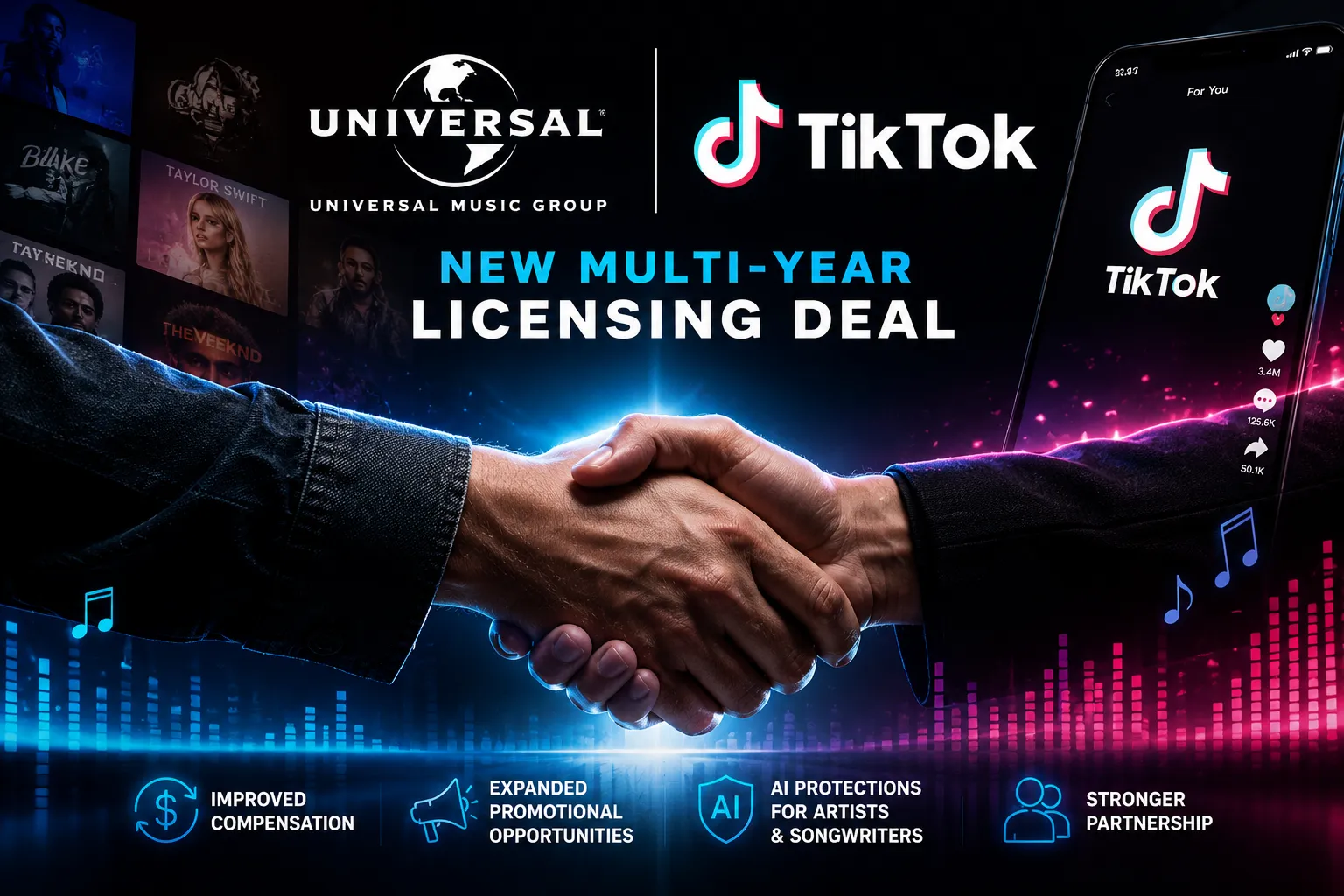
Months after one of the music industry's most public standoffs silenced songs across social media, Universal Music Group and TikTok have officially moved forward together. The two companies announced a new multi-year licensing agreement that restores Universal’s catalog to the platform and establishes broader terms around artist compensation, promotional opportunities, and protections related to artificial intelligence.
The agreement arrives after a turbulent dispute that began in early 2024 when Universal Music Group removed its catalog from TikTok following failed negotiations. At the center of the conflict were disagreements over artist compensation, concerns around AI-generated content, and broader questions about the value of music on social platforms. The removal led to videos featuring artists including Taylor Swift, Drake, and Olivia Rodrigo suddenly losing sound as songs were muted or removed entirely.
Under the new deal, Universal says its artists and songwriters will receive improved remuneration, expanded promotional tools, and stronger safeguards against unauthorized AI-generated music. The companies also pledged to collaborate on systems intended to identify and remove AI-created material that improperly imitates artists or infringes on rights.
The AI portion of the agreement may prove especially significant. Music companies have increasingly viewed generative AI as both an opportunity and a major threat. Deepfake recordings and synthetic vocals have become a growing concern throughout the industry. Universal previously pointed to unauthorized AI songs featuring artists like Drake and The Weeknd as examples of technology outpacing existing protections.
The return of Universal's catalog also underscores TikTok's continued influence in music discovery. Viral moments on the platform have become a major force in chart success and audience growth. Songs that gain traction on TikTok frequently spill into streaming charts and broader cultural conversations, making the app difficult for labels to ignore. Research and industry analysis following the dispute suggested music availability on TikTok carries measurable value for artists and fan engagement.
For fans, the practical result is simple: the music came back. For the industry, however, the agreement represents a larger signal. Future licensing negotiations may increasingly revolve around AI governance, creator economics, and platform accountability rather than simply royalty percentages.
The brief period of silence turned into one of the music business's loudest reminders: social platforms and music companies may argue over value, but neither side appears eager to operate without the other.