The Crocodile: The Seattle Venue That Helped Define Grunge and Outlived an Era
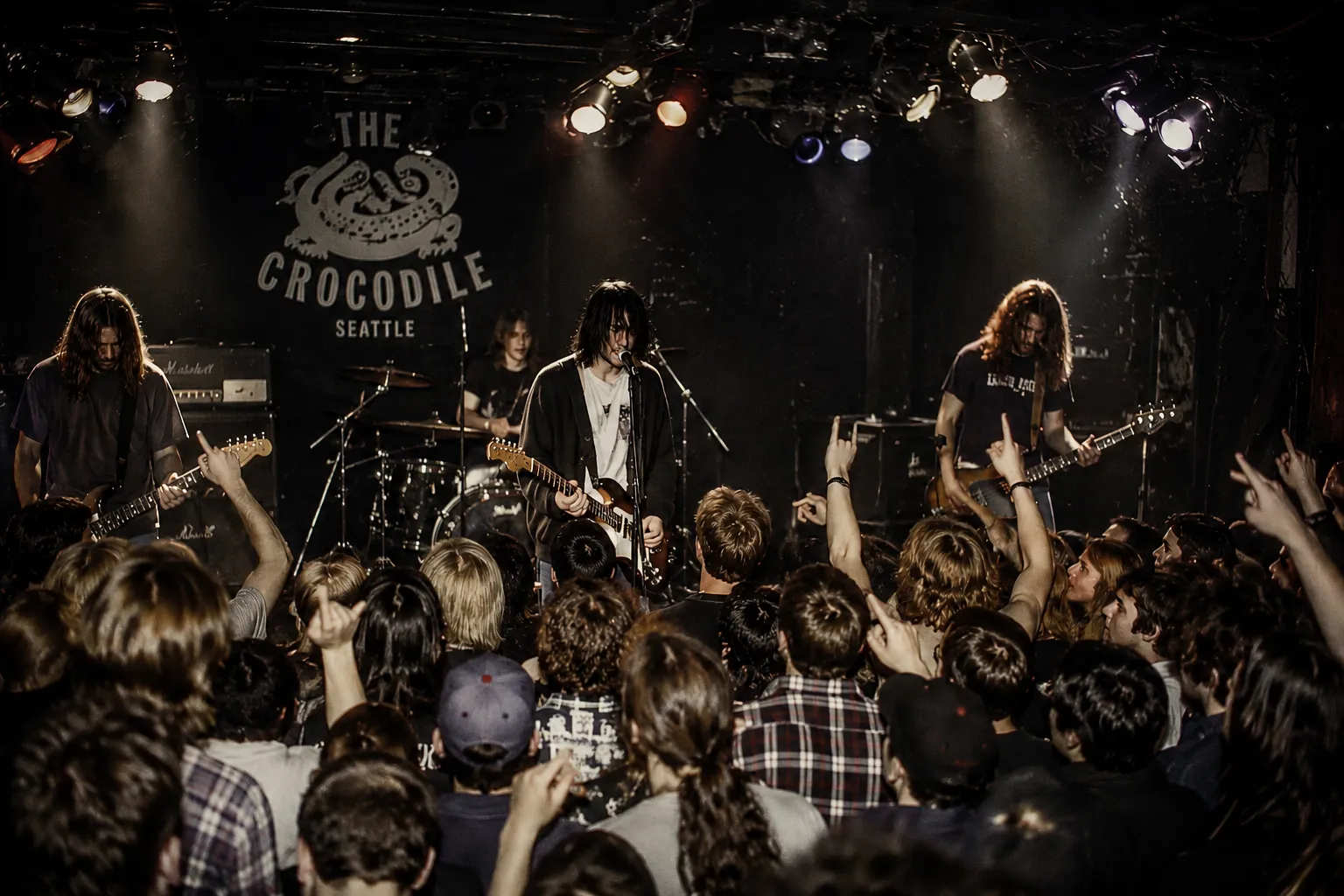
Long before Seattle became a global music landmark, before flannel became fashion and before the world knew the names Nirvana, Pearl Jam, and Alice in Chains, there was a club in Belltown quietly preparing to become one of the most important stages in American music history. That venue was The Crocodile — known by generations of fans simply as “The Croc.” More than three decades after opening its doors, it remains one of Seattle’s most legendary music institutions.
The Crocodile first opened on April 30, 1991 as the Crocodile Cafe at the corner of 2nd Avenue and Blanchard Street in Seattle’s Belltown neighborhood. Its first show featured local acts Love Battery and The Posies — a fitting beginning considering what would soon happen around it. The timing turned out to be almost absurdly perfect. Within months, Seattle’s underground music scene exploded into a worldwide cultural movement.
As grunge took over the early 1990s, The Crocodile became one of the movement’s essential homes. Bands including Nirvana, Pearl Jam, Mudhoney, Soundgarden, Mad Season, and countless others played its stage, often before becoming internationally known names. It wasn’t just a place to see concerts — it became a community gathering point where musicians, fans, and industry figures crossed paths nightly.
The venue quickly developed a reputation for unpredictability. Surprise sets, secret appearances, and career-defining performances became part of the Crocodile mythos. Mad Season, featuring members of Alice in Chains, Pearl Jam, and Screaming Trees, played its very first show there in 1994 under the name “The Gacy Bunch.” Years later, artists from completely different generations — from The Strokes and Beastie Boys to Billie Eilish — would continue appearing on the venue's stage.
The Crocodile’s influence extended beyond music itself. It appeared in Cameron Crowe’s Seattle-based film Singles, helping immortalize its place in pop culture. It also became known as a hangout spot for musicians even on nights they weren't performing. R.E.M. guitarist Peter Buck eventually became involved with the venue through owner Stephanie Dorgan, helping strengthen its reputation as a gathering place for artists rather than simply a business.
Still, even iconic venues aren’t immune to reality. In late 2007, after sixteen years of operation, The Crocodile unexpectedly shut down. Fans feared one of Seattle's cultural landmarks had reached the end of the road. Its closure sparked widespread concern across the music world because by then the club represented something larger than itself — a physical link to Seattle's musical identity.
The story didn’t end there.
In 2009, a new ownership group stepped in, including Alice in Chains drummer Sean Kinney, longtime Seattle music manager Susan Silver, and other music industry figures. The venue was renovated and reopened under a simpler name: The Crocodile. The relaunch signaled something important — Seattle wasn't interested in preserving the Croc merely as a museum piece. It intended to keep it alive.
Then came another major transformation. After pandemic shutdowns and years of growth, The Crocodile relocated in 2021 to a much larger 30,000-square-foot venue a few blocks away. The new location expanded far beyond a traditional concert club. It added multiple performance spaces, bars, a café, a comedy room, and even hotel rooms above the venue. The expansion reflected a bigger vision: preserving the spirit of the original Croc while evolving for a new era of entertainment.
Today, The Crocodile stands as one of the rare venues that successfully crossed generations. Many clubs become frozen in nostalgia. The Croc somehow avoided that trap. It remains deeply connected to Seattle’s grunge past while continuing to host emerging artists and modern touring acts. Rolling Stone once ranked it among America's best clubs, and Seattle music fans still treat it like sacred ground.
For a venue born in the shadows of a local music scene, that’s a remarkable survival story.
And perhaps that's always been The Crocodile's greatest trick: every era thinks it discovered the place first.