Streaming Fraud Detection Is Ripe for Abuse
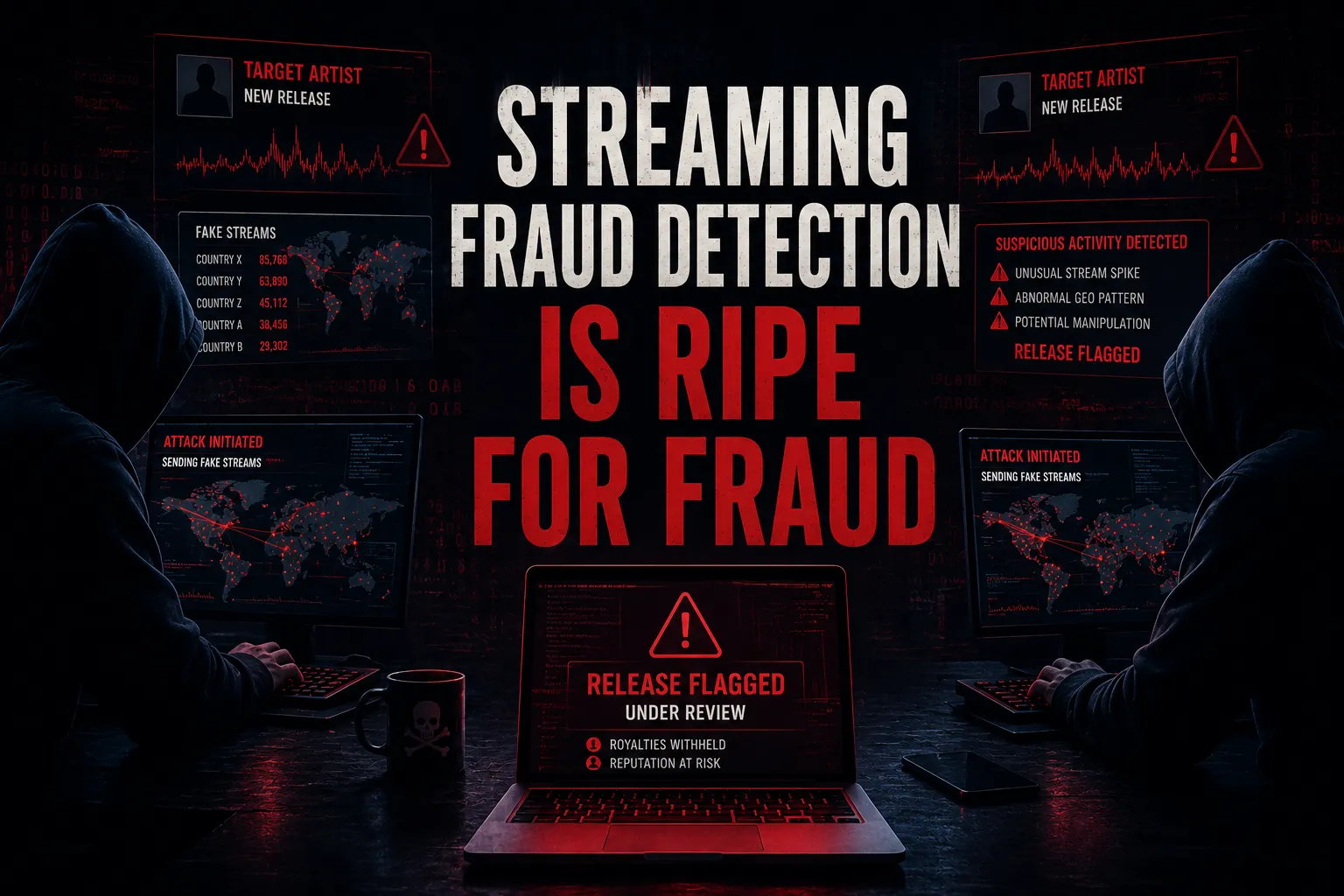
Streaming platforms built fraud detection systems to stop manipulation, protect royalty pools, and keep fake plays from distorting the music economy. But an uncomfortable question is beginning to emerge across independent music circles: what if those same systems can be manipulated themselves?
Companies across the streaming ecosystem—including major platforms like Spotify, distributors such as DistroKid, TuneCore, and CD Baby, along with anti-fraud providers and digital service companies—rely heavily on algorithms designed to identify suspicious activity. Those systems monitor stream spikes, geographic anomalies, repetitive listening behavior, account patterns, playlist activity, and signals associated with artificial traffic.
When those systems trigger, the consequences can be brutal. Songs can disappear. Revenue can be frozen. Releases can be flagged. Entire catalogs can be suspended. In some cases, artists can lose distribution access altogether.
The problem is simple—and potentially dangerous: fraud systems often focus on detecting suspicious streams, not identifying who actually caused them.
That creates a disturbing possibility. What if fake streams are not being purchased by artists attempting to inflate numbers? What if they are being directed at artists by someone else entirely?
In theory, a bad actor could purchase artificial streams and target another artist's release. Not to gain royalties. Not to boost visibility. To create damage. Trigger a fraud review. Create suspicious patterns. Cause a release to get flagged. Kill momentum.
The result would not resemble traditional fraud. It would resemble sabotage.
And in an industry increasingly driven by automation, the risks become difficult to ignore. Independent artists often have limited visibility into where streams originate, how playlist traffic behaves, or who may be interacting with their music. If a sudden flood of suspicious traffic appears, many artists may not even know it is happening until penalties arrive.
For smaller creators, the consequences can be devastating. Months of work—marketing campaigns, playlist outreach, content promotion, social growth, advertising spend, release schedules—can vanish overnight if a release gets pulled or an account gets flagged.
Technology platforms already struggle with false positives everywhere else. Social media companies remove legitimate content. Payment processors freeze legal transactions. Spam filters routinely block authentic messages. Automated systems operate at enormous scale, and scale often means mistakes.
Streaming is no different.
Automation has become essential because platforms process billions of streams. No company can manually investigate every anomaly. But automation without context creates a weakness: systems may identify suspicious behavior without understanding intent.
That becomes increasingly concerning because fake traffic itself has become easier to buy. Search online and services openly advertise streams, followers, engagement boosts, and playlist activity. Some packages cost surprisingly little. If artificial traffic becomes inexpensive and widely accessible, so does the ability to misuse it.
None of this suggests streaming fraud is imaginary. Artificial streaming remains a serious issue that damages artists and the broader music economy. Platforms absolutely need enforcement systems. But if anti-fraud technology assumes every suspicious signal starts with the artist receiving punishment, the industry may have created a dangerous blind spot.
The next generation of fraud detection may need to ask a harder question.
Not simply: Were the streams fake?
But: Who wanted them there?
Because if fraud detection systems can be exploited by third parties, the industry may eventually discover a darker reality: systems built to protect artists can also be used against them.