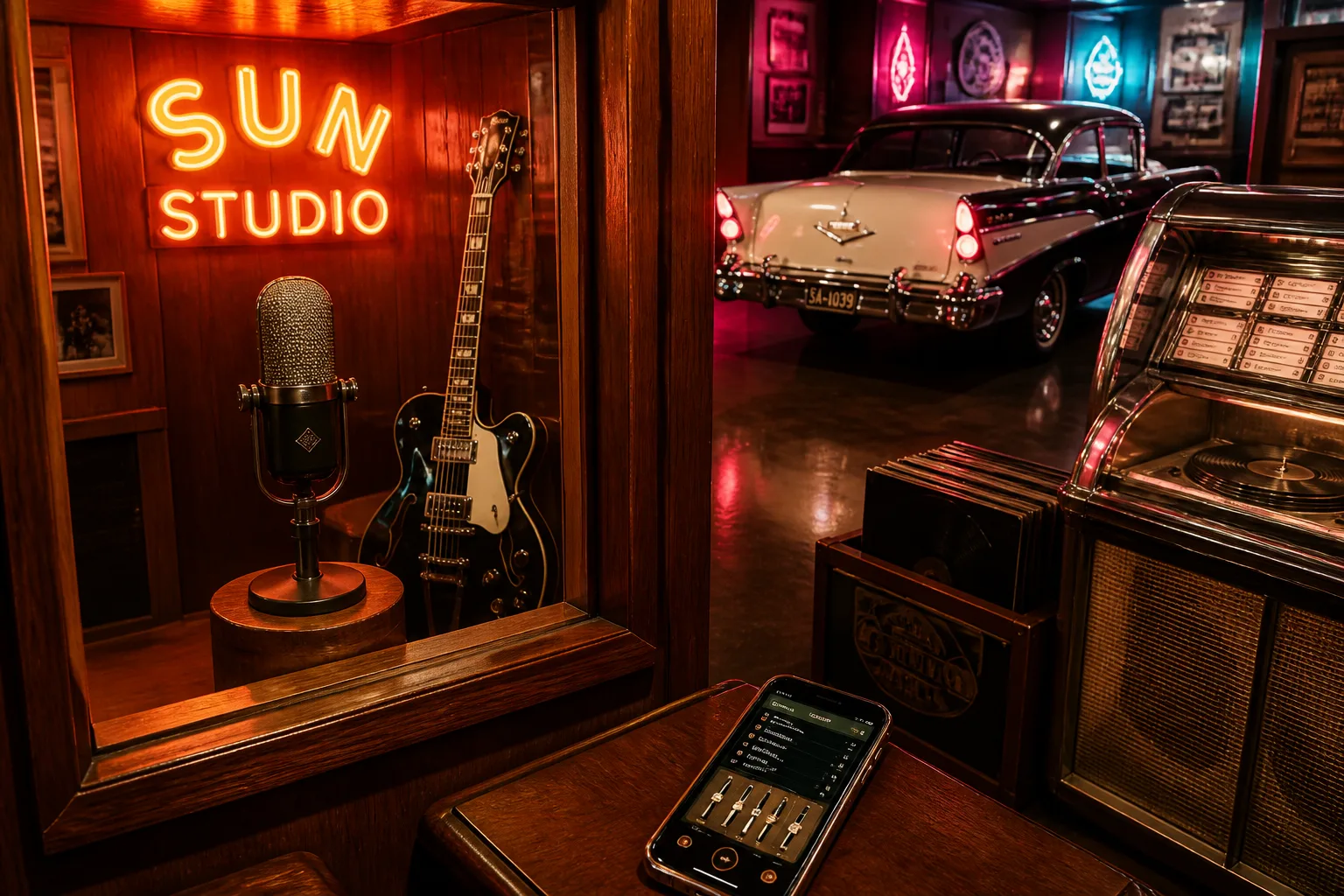
From Sun Studio to TikTok: The Enduring Legacy of Rockabilly
Rockabilly is a musical hybrid that fuses country twang, gospel grit, and rhythm‑and‑blues punch. It burst onto the scene in the early 1950s in the American South, with Memphis’s Sun Studio serving as its birthplace. Producer Sam Phillips recorded the first true rock‑and‑roll single there and later launched the careers of Elvis Presley, Carl Perkins, Jerry Lee Lewis, and Johnny Cash—artists whose early work defined the genre’s core sound.
The watershed moment came in 1954 when Presley laid down “That’s All Right” at Sun Studio. The track blended a hillbilly vocal style with an R&B‑inspired beat, creating an electrifying sound that was both fresh and infectious. Perkins followed with “Blue Suede Shoes,” a swagger‑laden tune that showcased the driving rhythm that would become a rockabilly hallmark. Lewis’s piano pyrotechnics and Cash’s “boom‑chicka‑boom” drumming reinforced the genre’s rhythmic foundation, while female trailblazers like Wanda Jackson proved that rockabilly was not limited to male performers, as she delivered the punchy “Let’s Have a Party.”
By the late 1950s, rockabilly had crossed over into mainstream consciousness. Yet the British Invasion and the polished pop of the 1960s pushed the style to the periphery. The genre did not vanish; it simply lay dormant, awaiting a new spark.
The mid‑1970s sparked a revival that blended nostalgia with punk energy. Robert Gordon, alongside guitarists Link Wray, Danny Gatton, and Chris Spedding, re‑introduced rockabilly as a living art form rather than a nostalgic pastiche. The Stray Cats—Brian Setzer on Gretsch guitar, Lee Rocker on slap bass, and Slim Jim Phantom on stand‑up drums—brought the sound back to international attention with hits like “Rock This Town” and “Stray Cat Strut.” Their music fused classic rockabilly rhythms with a contemporary edge, proving the style’s adaptability.
In the United Kingdom, the revival merged with punk to birth psychobilly. The Cramps, for instance, layered horror‑movie theatrics onto a rockabilly framework, demonstrating the genre’s versatility. Other musicians of the era—Dave Edmunds, Nick Lowe (with Rockpile), and The Blasters—infused pub‑rock and roots‑rock with rockabilly DNA, broadening its reach.
Today, rockabilly’s fingerprints appear across Americana, indie rock, and pop. Chris Isaak’s “Baby Did a Bad Bad Thing” and JD McPherson’s Signs & Signifiers both draw on clean guitar tones and rhythmic snap that echo early rockabilly. The neo‑rockabilly scene remains vibrant, with Reverend Horton Heat, Imelda May, and the Brian Setzer Orchestra continuing to perform and record.
Pop and indie acts also echo the genre’s sonic palette. Jack White’s slap‑back echo guitar, The Black Keys’ retro swagger, and Bruno Mars’ 1950s‑inspired production on “Runaway Baby” all showcase rockabilly’s lasting appeal.
The genre’s visual and musical language has found new life on platforms such as TikTok and YouTube, where vintage fashion, dance styles, and classic guitar tones are frequently showcased. This digital presence keeps rockabilly relevant for younger audiences and ensures its core elements—strong rhythm, twangy guitar, and a rebellious attitude—remain integral to contemporary music culture.
In sum, rockabilly originated in the 1950s at Sun Studio, was revitalized in the 1970s and 1980s, and continues to influence a wide range of modern musicians and media. Its enduring legacy demonstrates how a style born in a Memphis studio can evolve, adapt, and persist across generations and platforms.