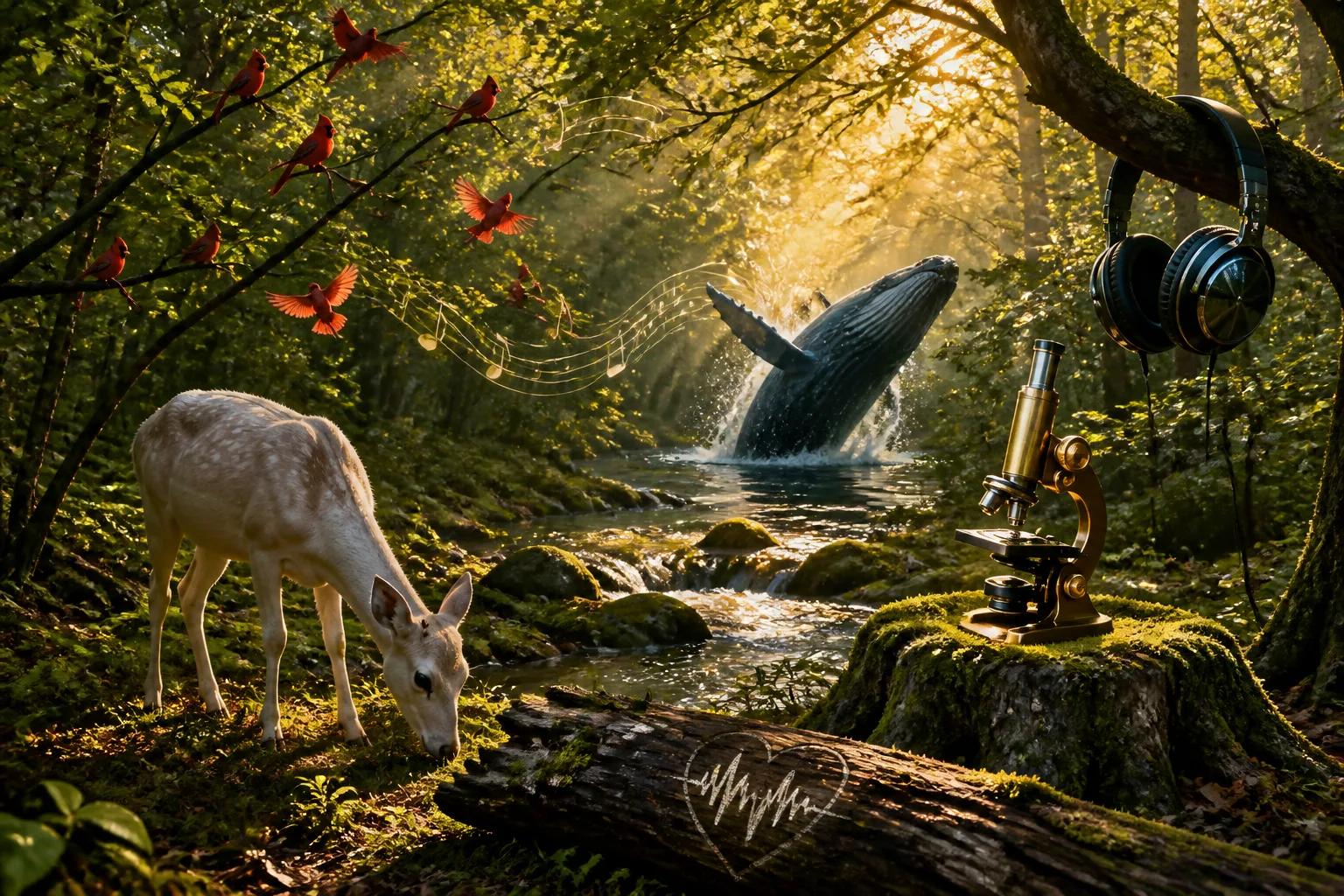
Zoomusicology Reveals How Animal Soundscapes Heal Humans and Shape Music Research
On World Music Day, scientists are turning to the wild for a new kind of therapy: the rhythmic hum of bees, the call of crickets, and the chorus of forest creatures are now being studied for their soothing power.
The discipline that makes this possible—zoomusicology—was first articulated by composer François‑Bernard Mâche in his 1983 book Music, Myth, and Nature. By fusing musicology with zoology, Mâche set out to map the musical qualities of animal communication—rhythm, pitch, timbre—and to explore how these sounds can resonate with human listeners.
A related sub‑field, ornithomusicology, was coined by musicologist Peter Szöke in 1963 to focus specifically on bird song. Together, these branches have attracted scholars such as Dario Martinelli, Hollis Taylor, and David Rothenberg, who have expanded the study of animal music beyond birds to include insects, mammals, and marine life.
The practical implications are already visible. In Slovenia, doctors use the rhythmic wingbeats of honeybees—vibrating at about 200 to 250 Hz—to stimulate the vagus nerve and lower stress in hospitalized patients. Similar observations arise elsewhere: a quiet evening beneath a canopy of crickets and frogs can reduce anxiety, and a forest’s collective chorus can calm the human mind.
A cornerstone of the field is the work of Bernie Krause, a pioneer in natural sound recording. Since founding Wild Sanctuary in 1968, Krause has amassed more than 5,000 hours of field recordings from Borneo, Costa Rica, Sumatra, and Zimbabwe. His “Great Animal Orchestra” demonstrates how forests weave bird calls, insect buzzes, and mammal vocalizations into a complex, evolving musical tapestry that is now used in sound‑bath installations and research on the psychological effects of natural soundscapes.
Zoomusicologists also investigate how non‑human animals perceive music. Studies show that sea lions, parrots, cats, and monkeys can recognize rhythmic patterns and even be trained to play simple instruments. In West Africa, chimpanzees use intricate vocal sequences to coordinate group movements, while in India’s Manas National Park, the distinct calls of Hoolock gibbons travel for kilometers and serve as individual identifiers.
Beyond therapy, the field informs sound‑scape ecology, which examines acoustic relationships among organisms. Researchers have found that human‑generated noise increasingly dominates many natural environments. By documenting and preserving biophonic recordings, scientists aim to support conservation efforts and raise awareness of the acoustic dimensions of biodiversity.
Industry players are taking notice. Contemporary composers are incorporating animal sounds into their work, and new‑age and ambient musicians routinely layer natural recordings with electronic processing. The growing public interest in nature‑based wellness practices also supports a niche market for sound‑therapy products featuring authentic wildlife audio.
While zoomusicology is still developing, its foundational research is clear: animal sounds possess measurable musical structures, and human exposure to these sounds can produce physiological and psychological benefits. Ongoing projects continue to catalogue species‑specific vocalizations, analyze their musical properties, and test their therapeutic potential in clinical settings.
At present, zoomusicology remains a collaborative, interdisciplinary field. Researchers are expanding databases of animal recordings, refining analytical tools, and exploring practical applications in medicine and conservation. The next steps involve integrating these findings into broader environmental policy and health‑care protocols, ensuring that the healing power of nature’s music is recognized and protected.