How a 1964 Queens Radio Row Trip Sparked a Lifelong Love for 60s Music
A six‑year‑old boy from Queens stepped into a world of sound on a summer day in 1964, and that single trip to New York’s Radio Row would shape his musical life for decades.
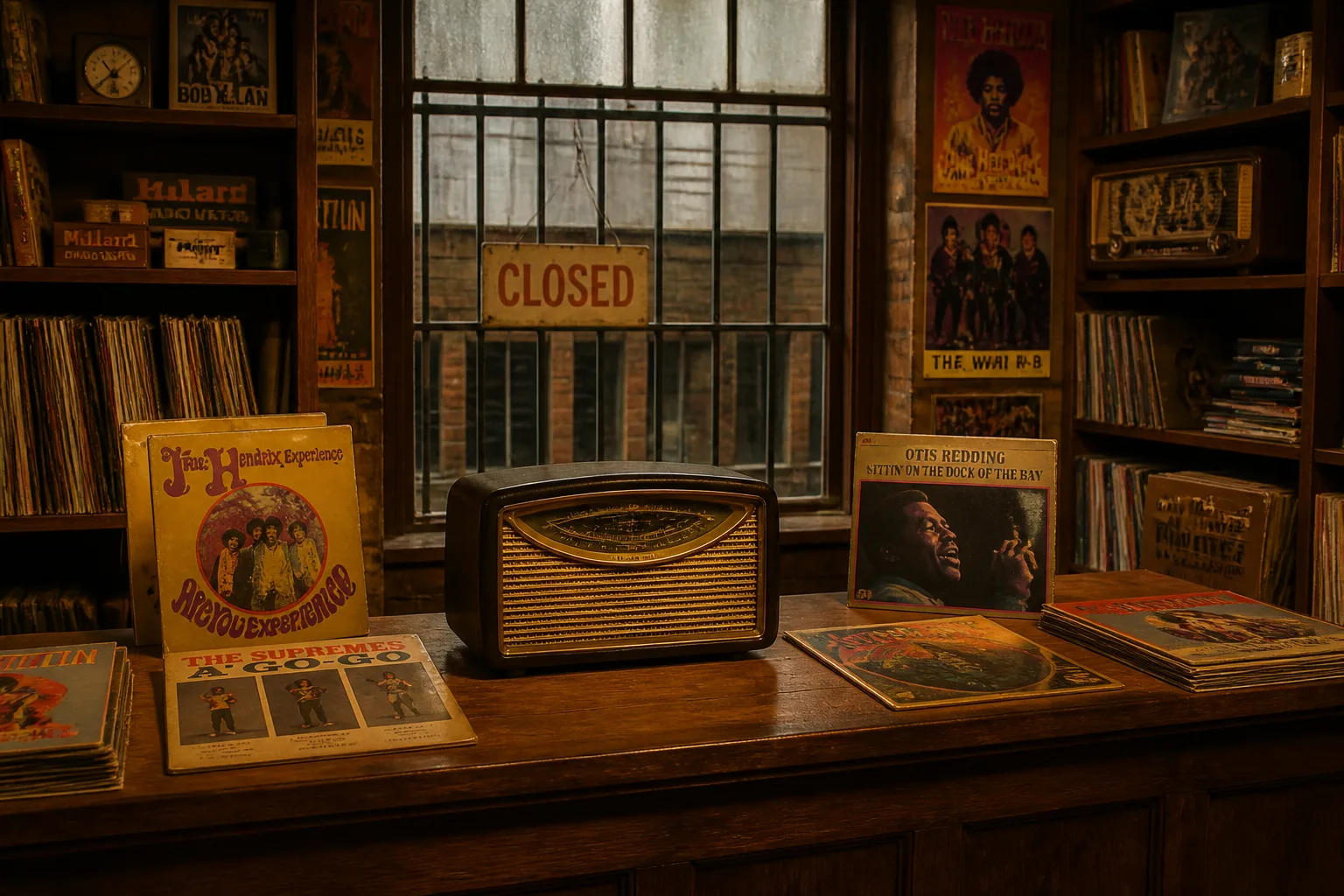
In the basement of a family apartment, a friend’s older sister handed him a pocket‑sized radio she’d just bought from the electronics district that would later be replaced by the World Trade Center. The little device was more than a toy; it was a portal to the era’s “Top Forty” playlists, the term that defined the most popular songs on the airwaves. From the crackle of the receiver, the boy first heard the Beatles on WABC 77, a station that was broadcasting the early hits of the band that had just erupted into Beatlemania. When A Hard Day’s Night hit shelves in July, the boy could feel the pulse of the 60s rock revolution in his living room.
The radio didn’t limit him to the British invasion. He turned the dial to 45‑rpm records that filled his small collection: “The Name Game,” “Downtown,” “Papa’s Got a Brand New Bag,” “Satisfaction,” “Love Potion Number Nine,” “Look of Love,” and “The Game of Love.” Motown’s weekly releases also found their way into his ears, offering a steady stream of soul and R&B that would later inform his teenage interest in jazz.
In 1969, a move to a Long Island suburb shifted the boy’s social landscape. The new environment favored cars over sidewalks, and he found himself with fewer friends for summer hang‑outs. Yet the radio remained a constant companion. The track that defined that season was Creedence Clearwater Revival’s “Bad Moon Rising,” released on April 16, 1969, as the lead single from Green River. Its driving rhythm and ominous lyrics—“Trouble on the way, I feel it in my bones”—mirrored the boy’s solitary experience.
That same year, he bought Pendulum, Creedence’s third studio album, marking his first record purchase. The opening track, “Molina,” features a confrontational vocal that captured the boy’s bewilderment as a twelve‑year‑old. While the song’s themes of uncertainty resonated personally, the music itself became a soundtrack to his adolescence.
Beyond rock, the boy’s exposure to Motown’s catalog broadened his musical horizons. Founded by Berry Gordy Jr. in 1959 and incorporated in 1960, the label produced 79 songs that reached the Billboard Hot 100 top ten between 1960 and 1969. Its crossover appeal helped integrate African‑American music into mainstream American culture.
In later years, the boy’s interests shifted toward literature and jazz. He read Willa Cather’s short story “Paul’s Case” and began exploring jazz recordings, a genre that had been nurtured by the rhythmic complexity of 60s soul and rock.
Today, the former child‑musician—now an adult—attributes his lifelong appreciation for music to that early exposure. His story underscores how the 1960s, with its convergence of British pop, American soul, and emerging rock, created a cultural touchstone that continues to influence listeners across generations.
The narrative also highlights the role of physical media and radio in disseminating music before the digital age. Radio Row’s presence in lower Manhattan, the popularity of 45‑rpm records, and the influence of stations like WABC 77 illustrate the infrastructure that supported the 60s music boom.
In sum, a single trip to Radio Row in 1964 set a chain of events that shaped a young boy’s musical identity, reflecting the broader impact of the 1960s music revolution on American society.