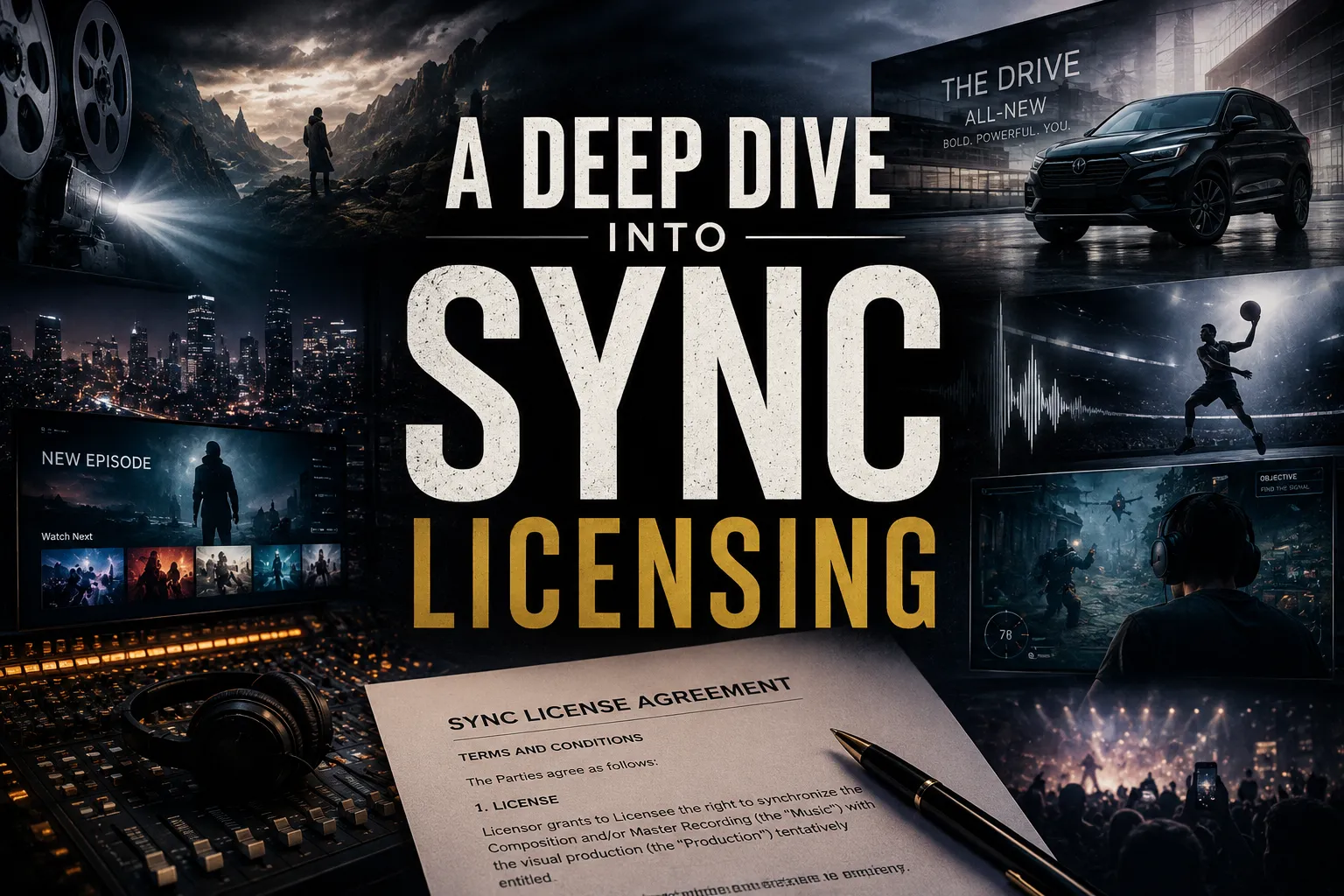
A Deep Dive Into Sync Licensing: How Music Ends Up in Movies, TV Shows, Commercials, Video Games, and Viral Content
For many musicians, songwriters, producers, and rights holders, sync licensing represents one of the most valuable and potentially lucrative opportunities in the music business. A single placement in a television series, movie trailer, commercial, video game, or viral online campaign can generate significant revenue, introduce music to millions of new listeners, and even revive decades-old recordings. In recent years, sync licensing has become an increasingly important source of income as artists seek revenue streams beyond traditional record sales and streaming platforms.
But what exactly is sync licensing, and why has it become such a critical part of the modern music industry? The answer lies in the growing demand for music across virtually every form of visual media. From Netflix series and blockbuster films to TikTok campaigns and YouTube videos, content creators constantly need music that helps tell stories, establish moods, and connect emotionally with audiences.
What Is Sync Licensing?
Sync licensing, short for synchronization licensing, occurs whenever music is paired or "synchronized" with visual media. Any time a song appears in a movie, television show, commercial, YouTube video, video game, documentary, trailer, sports broadcast, streaming series, or corporate video, a sync license is generally required. The concept is straightforward: someone wants to combine music with moving images, and permission must be obtained from the rights holders before that can happen legally.
Unlike traditional music distribution, sync licensing is not about selling music directly to consumers. Instead, it involves granting permission for music to become part of a larger creative project. Every successful placement requires negotiations between content creators and rights holders to ensure all parties are compensated appropriately.
The Two Rights That Usually Must Be Cleared
One of the most misunderstood aspects of sync licensing is that a song typically involves multiple rights holders. The first right is the composition, which includes the underlying songwriting, melody, and lyrics. These rights are usually controlled by songwriters and music publishers. The second right is the master recording, which refers to the specific recorded version of the song and is often controlled by a record label or the artist themselves.
If a film studio wants to use a famous recording, it generally needs permission from both the publisher and the owner of the master recording. If either side refuses, the placement usually cannot proceed. This dual-clearance system explains why some songs are more difficult and expensive to license than others.
How The Licensing Process Works
The sync licensing process often begins with a music supervisor, producer, editor, advertising agency, game developer, or content creator searching for music. They may need a song that feels uplifting, dramatic, nostalgic, romantic, energetic, or suspenseful. Music supervisors can listen to thousands of tracks while searching for the perfect fit.
Once a suitable song is identified, negotiations begin. Factors such as usage length, geographic territory, exclusivity, media format, duration of the license, and overall budget all influence the final fee. After contracts are signed and rights are cleared, the music can legally be synchronized with the visual content.
The Rise of Music Supervisors
Music supervisors have become some of the most influential people in modern entertainment. They serve as the bridge between content creators and rights holders, helping identify songs that elevate films, television series, commercials, documentaries, trailers, and video games. A successful music supervisor not only understands music but also understands storytelling.
Many artists have experienced career-changing moments because a music supervisor selected one of their songs. A placement during a powerful scene in a popular television series can expose an artist to millions of viewers overnight. In some cases, streaming numbers surge dramatically after a major sync placement.
Why Sync Licensing Has Become So Important
The streaming era has transformed how artists earn money. While streaming generates massive audience reach, royalty payments are often relatively small on a per-stream basis. Sync licensing offers a different revenue model. Instead of requiring millions of plays, a single placement can generate substantial upfront income.
Depending on the project, sync fees can range from a few hundred dollars to hundreds of thousands of dollars. Global advertising campaigns and major film placements can sometimes generate even larger payouts. For independent musicians, one successful sync placement can outperform years of streaming revenue.
Television And Streaming Opportunities
Television remains one of the largest sync markets in the world. Songs regularly appear in network dramas, reality shows, sports broadcasts, competition programs, and streaming originals. Many viewers discover new artists through television placements, leading to increased streaming activity and fan engagement.
Streaming platforms such as Netflix, Hulu, Disney+, Prime Video, Apple TV+, and Max have dramatically increased the demand for licensed music. The explosion of original content has created more opportunities than ever for artists and songwriters to place their work.
Film Placements And Long-Term Exposure
Movies have long been a powerful vehicle for music discovery. Some songs become permanently linked to specific films, creating cultural moments that last for decades. A successful film placement can continue generating value through theatrical releases, streaming availability, television broadcasts, and home video sales.
Many classic songs have experienced major revivals after appearing in popular films. Younger audiences often discover older music through movie soundtracks, creating entirely new generations of fans.
The Commercial And Advertising Market
Advertising represents one of the most lucrative sectors of sync licensing. Brands invest heavily in music because the right song can dramatically improve audience engagement and emotional connection. Advertisers frequently seek tracks that communicate energy, authenticity, excitement, or nostalgia.
Modern artists increasingly view commercial licensing as a valuable business opportunity. While there was once concern about "selling out," attitudes have shifted considerably. Today, many musicians actively pursue brand partnerships and advertising placements.
Video Games And Interactive Media
The gaming industry has become a major sync licensing destination. Modern games often feature extensive soundtracks that help establish atmosphere and enhance player immersion. Songs may appear during gameplay, menus, trailers, esports broadcasts, and promotional campaigns.
Because gamers often spend dozens or hundreds of hours with a title, video game placements can create particularly strong connections between audiences and music. Some artists have built substantial followings through gaming-related placements alone.
Production Music Libraries
Production music libraries play a critical role in the sync ecosystem. These companies maintain catalogs of pre-cleared music that can be licensed quickly for television, advertising, YouTube videos, podcasts, documentaries, and corporate productions. Many composers earn steady income by creating music specifically for production libraries.
Libraries simplify the licensing process by making ownership and rights information readily available. This efficiency is particularly attractive for projects operating under tight deadlines.
Why Independent Artists Often Have An Advantage
Many independent artists assume major labels dominate sync licensing opportunities, but that is not always true. Music supervisors frequently prefer tracks with straightforward ownership structures. If an artist controls both publishing and master rights, licensing can happen much faster and with fewer complications.
This flexibility makes independent artists highly attractive to content creators who need quick approvals. In many situations, ease of licensing can be just as important as the music itself.
The Future Of Sync Licensing
The future of sync licensing appears exceptionally bright. Streaming platforms continue producing vast amounts of content. Video games keep growing. Social media creates entirely new licensing categories. Brands are investing heavily in digital campaigns. Artificial intelligence may introduce new challenges and opportunities, but demand for quality music remains strong.
Every new film, television show, commercial, documentary, mobile app, YouTube channel, podcast, social media campaign, and streaming service requires music. That reality continues to drive demand for licensed catalogs and creates opportunities for artists at every level of the industry.
Conclusion
Few sectors of the music business offer the combination of revenue potential, exposure, and career growth found in sync licensing. A successful placement can generate immediate income while simultaneously introducing music to entirely new audiences. As content creation expands across every platform imaginable, sync licensing will remain one of the most important and dynamic areas of the modern music industry.
Tags: Sync Licensing, Music Licensing, Music Business, Music Supervisors, Publishing Rights, Master Rights, Film Music, Television Music, Commercial Music, Video Game Music, Production Music, Songwriters, Independent Artists, Music Industry, Music News