From Barney to Baby Shark: The Long, Loud History of Children's Songs That Slowly Drove Parents Insane
Every generation of parents believes it suffered more than the one before.
Not because of wars.
Not because of inflation.
Not because of politics.
Because of children's music.
For decades, kids have happily bounced around living rooms singing along to cheerful educational songs while adults quietly contemplated whether moving to a remote cabin without electricity might actually be a reasonable life choice.
From purple dinosaurs to underwater sharks, the history of children's music is filled with songs specifically engineered to lodge themselves into the human brain and refuse to leave.
Scientists call this an earworm.
Parents call it psychological warfare.
The Barney Era
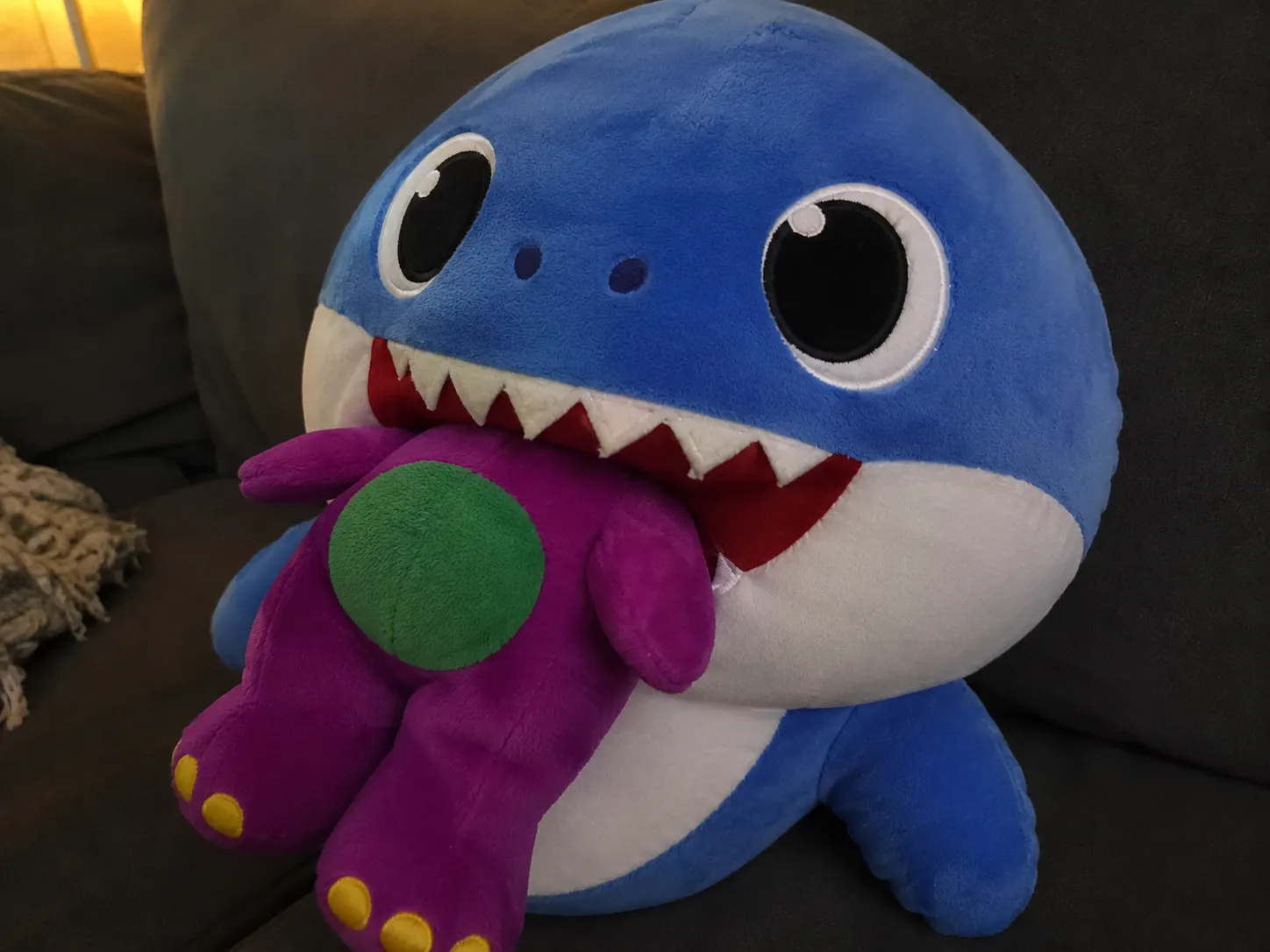
For many parents of the 1990s, the modern nightmare began with Barney.
The giant purple dinosaur arrived with a simple mission: teach children kindness, friendship, and basic life lessons.
Instead, he accidentally created one of the most persistent songs in human history.
"I Love You, You Love Me" seemed harmless at first.
Then parents heard it again.
And again.
And again.
Soon the song became less of a melody and more of a permanent resident inside people's brains.
Many adults reported hearing it while grocery shopping, driving, working, or attempting to sleep.
Researchers never officially studied the phenomenon.
Mostly because they were busy trying to forget it themselves.
The Wiggles Take Over
Then came The Wiggles.
The Australian group somehow convinced millions of children that fruit salad deserved its own anthem.
"Fruit Salad, Yummy Yummy" became one of the most successful songs ever written about chopped produce.
Adults initially laughed.
Then they heard it 4,000 times.
Eventually, many parents could identify Wiggles songs from three rooms away after hearing only a single drum beat.
Some developed reflexive responses to phrases like "Hot Potato."
Medical experts are still investigating.
Thomas the Tank Engine and the Soundtrack of Repetition
Not every children's music phenomenon involved lyrics.
Thomas the Tank Engine proved that repetitive theme music alone could slowly wear down an adult's defenses.
The theme itself wasn't bad.
In fact, it was quite catchy.
That was the problem.
After hearing it seven thousand times, many parents found themselves humming train music while attending meetings, weddings, and funerals.
The engines never stopped.
The soundtrack never stopped.
The trains always arrived on time.
Unlike a parent's remaining sanity.
The Disney Domination
Disney deserves special recognition.
The company somehow discovered a formula capable of turning every movie song into a permanent household soundtrack.
Parents who watched Frozen once quickly learned this lesson.
Children did not merely enjoy "Let It Go."
They declared war using it.
The song became unavoidable.
Cars.
Kitchens.
Restaurants.
Playgrounds.
Everywhere echoed the same chorus.
By the millionth performance, even Queen Elsa may have wanted to let it go.
Cocomelon and the Algorithm Apocalypse
Then technology entered the battlefield.
YouTube and streaming platforms changed everything.
In the old days, parents suffered through a limited number of songs.
Now children had access to an infinite playlist of highly optimized educational content.
Enter Cocomelon.
The brightly colored empire became one of the most watched entertainment brands on Earth.
Its songs are simple.
Its animations are cheerful.
Its ability to hold a toddler's attention borders on supernatural.
Many exhausted parents discovered that after several hours of Cocomelon, they could recite entire episodes from memory despite desperately wishing they could not.
The Arrival of Baby Shark
Then came the event historians may someday classify as a global incident.
Baby Shark.
Nobody knows exactly how it happened.
One day the world was functioning normally.
The next day everyone was singing about sharks.
Children loved it instantly.
Adults initially underestimated its power.
That was a mistake.
The song spread across schools, homes, birthday parties, sporting events, social media platforms, and eventually nearly every corner of civilization.
Its simplicity became its superpower.
The lyrics required almost no effort to learn.
The melody required almost no effort to remember.
And forgetting it became nearly impossible.
Baby Shark eventually accumulated billions of views and became one of the most watched videos in internet history.
At some point humanity collectively surrendered.
The Secret Genius Behind Children's Music
As much as parents complain, there is a reason these songs work.
Children learn through repetition.
Simple melodies, predictable rhythms, and memorable phrases help develop language skills, memory, coordination, and social interaction.
The songs that drive adults crazy often succeed because they are exceptionally effective educational tools.
The real problem is exposure.
A child might enjoy a song twenty times.
A parent might hear it eight hundred.
Perspective matters.
The Future of Children's Music
The next great children's anthem is probably already being created somewhere.
Perhaps it involves dancing vegetables.
Maybe singing robots.
Possibly educational llamas.
Whatever it is, children will love it.
Parents will tolerate it.
Then regret underestimating it.
Eventually they will find themselves humming it at work and wondering how things reached this point.
Such is the cycle of children's entertainment.
Every generation gets its own soundtrack.
Every generation insists theirs was the worst.
And every generation is probably right.