RIAA and IFPI Push for Standard AI Labels on Streaming Platforms
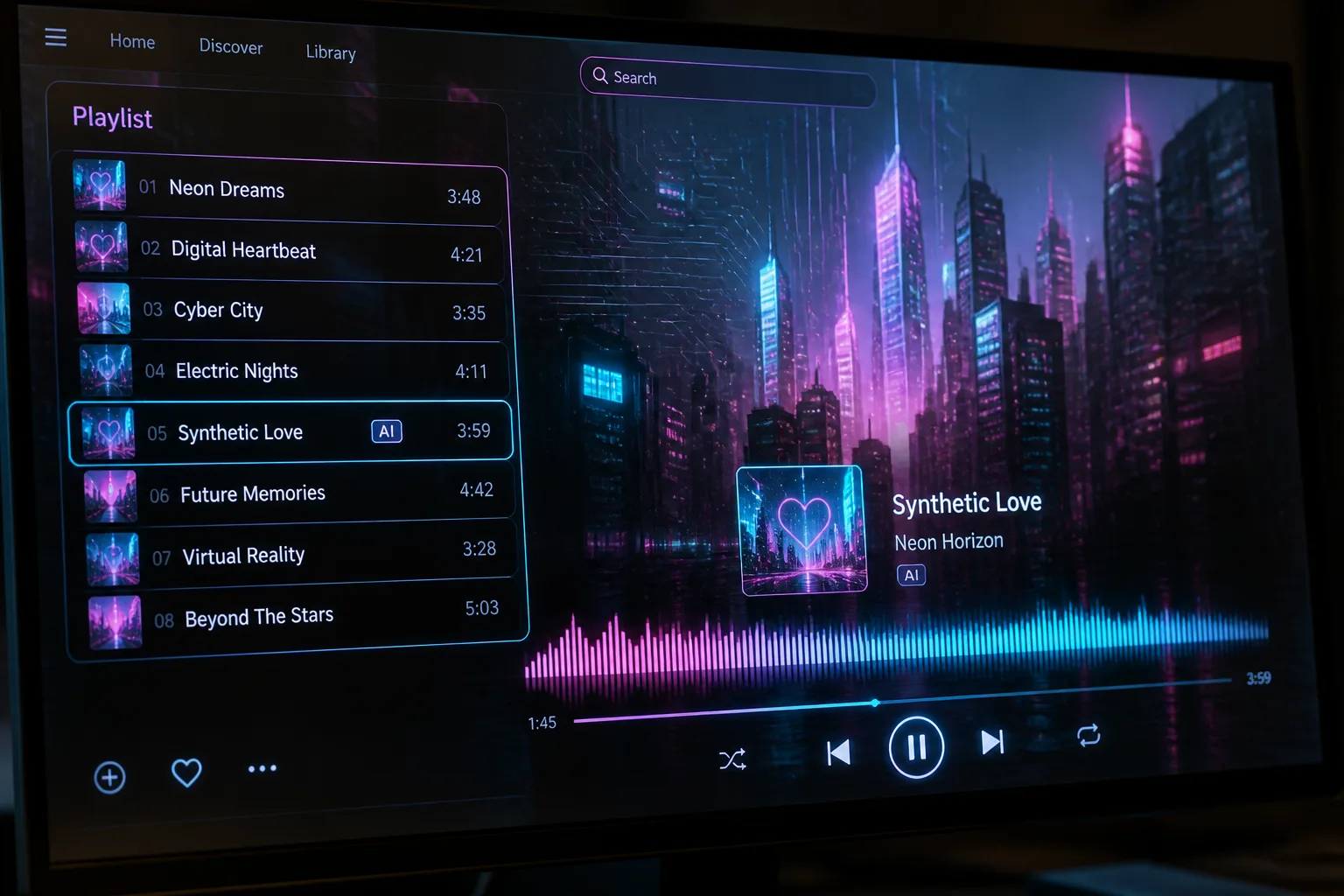
On Friday, July 10, 2026, a coalition of major music industry groups announced a voluntary labeling framework that would require tracks containing generative artificial intelligence (AI) to carry a visible tag on streaming services. The proposal, led by the Recording Industry Association of America (RIAA) and the International Federation of the Phonographic Industry (IFPI), adds two new badges—“AI‑Generated” and “AI‑Assisted”—to the metadata that appears next to a song on platforms such as Spotify, Apple Music, Deezer and TIDAL. The move follows a series of AI‑transparency experiments that have already begun on those services.
The two labels are designed to distinguish between recordings that are produced entirely by AI and those that are primarily human‑made but incorporate AI tools during the creative or production process. An “AI‑Generated” tag applies to tracks where AI creates the whole performance or where the AI performs the lead vocal or main instrumental parts. An “AI‑Assisted” tag applies when human artists perform the lead vocal and primary instruments, but AI is used in some portion of the recording. The labels would appear in the same way that explicit‑content badges currently appear, giving listeners a quick visual cue about the role of AI in a track. The framework does not cover AI used for songwriting, lyrics, cover art or music videos, and it is intended to be voluntary.
The proposal was announced by a broad coalition that includes the Recording Academy, SAG‑AFTRA, the Human Artistry Campaign, the American Association of Independent Music, A2IM, WIN, IMPALA and others. According to a statement released by the RIAA, the groups “share a common goal of giving fans clear information about how AI has been used in the music they listen to.” The RIAA’s chairman and chief executive officer, Mitch Glazier, told The Wall Street Journal that “transparency is just the best way to have it both ways.” The statement emphasizes that the labels are not meant to discourage the use of AI but to provide clarity while allowing creators to experiment with new tools.
The push for a unified standard comes after several streaming platforms introduced their own AI‑transparency measures over the past year. Spotify began adding AI disclosures to song credits when artists, labels or distributors choose to provide that information. Apple Music added its own AI‑transparency tags, while Deezer became the first major service to automatically detect and label AI‑generated music. TIDAL announced that fully AI‑generated music identified on the platform will no longer earn royalties. The BBC also updated its approach to AI‑generated music, reflecting wider concerns about transparency and audience trust. These initiatives illustrate a growing industry consensus that listeners should know when AI has played a significant role in creating a track.
If the labeling framework is adopted, artists, labels and distributors will need to provide accurate AI disclosures when delivering music to streaming services. The RIAA notes that this will make metadata an even more important part of the release process as AI standards continue to evolve. The proposal does not yet establish a universal standard, but it provides a common language that could be adopted by streaming services worldwide. The framework is voluntary, but the industry has already begun to align around the idea that AI’s role should be disclosed.
For independent artists, the new labels mean keeping an eye on evolving platform policies in addition to the usual considerations around distribution, metadata and royalties. As more streaming services refine their AI policies, providing accurate information about how a track was created could become a standard part of releasing new music. The current situation is that the RIAA and IFPI have issued the proposal, major streaming services have begun to implement AI‑transparency features, and the industry is preparing for a potential rollout of the new labeling system. The next steps will involve discussions with streaming platforms, feedback from artists and record labels, and the eventual integration of the AI‑Generated and AI‑Assisted badges into the metadata that appears on user interfaces.