The History of the Slide Guitar: From Hawaiian Shores to Blues and Rock Legends
The slide guitar is one of the most expressive instruments in modern music, capable of producing soaring melodies, vocal-like phrasing, and emotional tones that few other guitar techniques can match. While many listeners associate slide guitar with blues, Southern rock, and country music, its origins stretch back more than a century and begin thousands of miles away from the American South.
The roots of slide guitar can be traced to Hawaii during the late nineteenth century. Hawaiian musicians developed a technique known as "slack-key" guitar and began experimenting with running metal bars or smooth objects across guitar strings rather than pressing them against frets. This produced a fluid, gliding sound unlike anything heard in Western music at the time. One of the pioneers of the style was Joseph Kekuku, who is widely credited with helping popularize the steel guitar after reportedly discovering the technique as a young musician in Hawaii during the 1880s. As Hawaiian music gained international popularity in the early twentieth century, so did the distinctive sound of the sliding steel guitar.
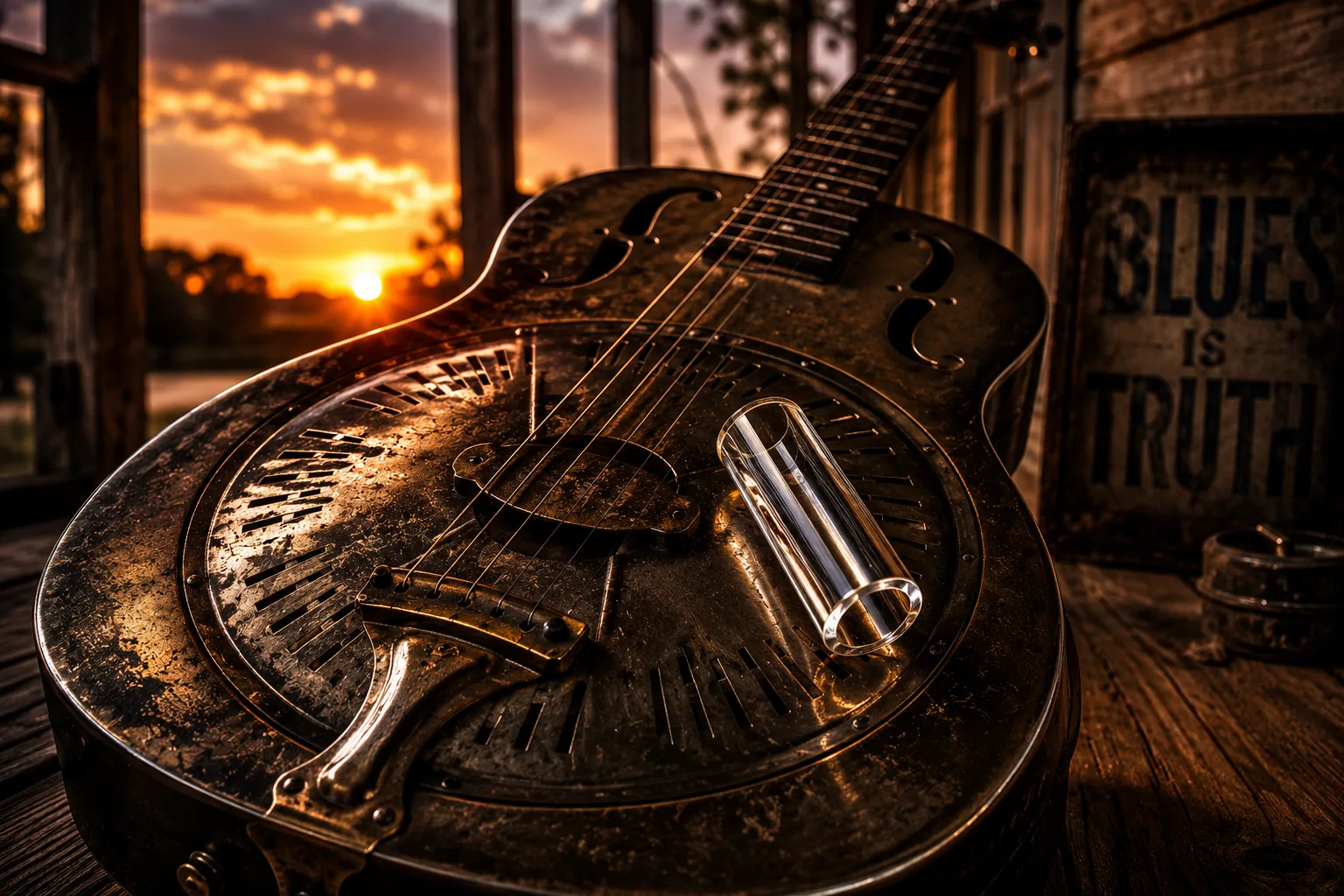
The technique soon found its way to the mainland United States, where it influenced a variety of musical styles. By the 1920s and 1930s, slide guitar had become closely associated with the emerging blues tradition. Musicians such as Blind Willie Johnson, Tampa Red, and Son House adopted the technique to create haunting, emotional sounds that mirrored the human voice. Rather than using specialized steel bars, many blues players used everyday objects such as pocket knives, metal tubes, or even the necks of glass bottles. This gave rise to the term "bottleneck guitar," which remains synonymous with slide playing today.
No discussion of slide guitar history is complete without Robert Johnson. Although Johnson's recordings were limited, his use of slide guitar helped define Delta blues and influenced generations of musicians. His recordings from the 1930s became foundational texts for the blues revival of the 1960s and inspired countless guitarists who followed.
As electric guitars became popular after World War II, slide guitar evolved once again. Muddy Waters brought Delta blues traditions to Chicago, adapting slide techniques to amplified instruments and helping create the sound of electric blues. Elmore James further expanded the style with powerful riffs and aggressive slide work, most famously on "Dust My Broom." His approach became one of the most copied slide guitar sounds in music history.
The rock era introduced slide guitar to an even larger audience. During the 1960s and 1970s, artists such as Duane Allman, Ry Cooder, George Harrison, Rory Gallagher, and Lowell George transformed slide guitar into a centerpiece of rock music. Duane Allman's performances with the Allman Brothers Band remain particularly influential, blending blues traditions with improvisation and Southern rock energy. His work on songs such as "Statesboro Blues" and his session playing on Derek and the Dominos' "Layla" are often cited among the greatest examples of slide guitar ever recorded.
Country music also embraced the technique through pedal steel and lap steel guitars. Artists in Nashville developed sophisticated steel guitar styles that became defining elements of country recordings. Although technically different from bottleneck slide guitar, these instruments share many of the same principles and helped broaden the slide tradition.
Today, slide guitar continues to thrive across blues, rock, country, folk, Americana, and even modern indie music. Contemporary players such as Derek Trucks, Sonny Landreth, and Bonnie Raitt have carried the tradition forward while developing their own unique approaches. Trucks in particular is often regarded as one of the greatest living slide guitarists, drawing comparisons to Duane Allman while expanding the instrument's possibilities with influences from jazz, Indian classical music, and world traditions.
From its Hawaiian beginnings to its central role in blues, rock, and country music, the slide guitar has remained one of the most distinctive voices in popular music. More than a technique, it represents a musical language capable of expressing emotion, movement, and feeling in ways that continue to captivate listeners more than a century after its invention.