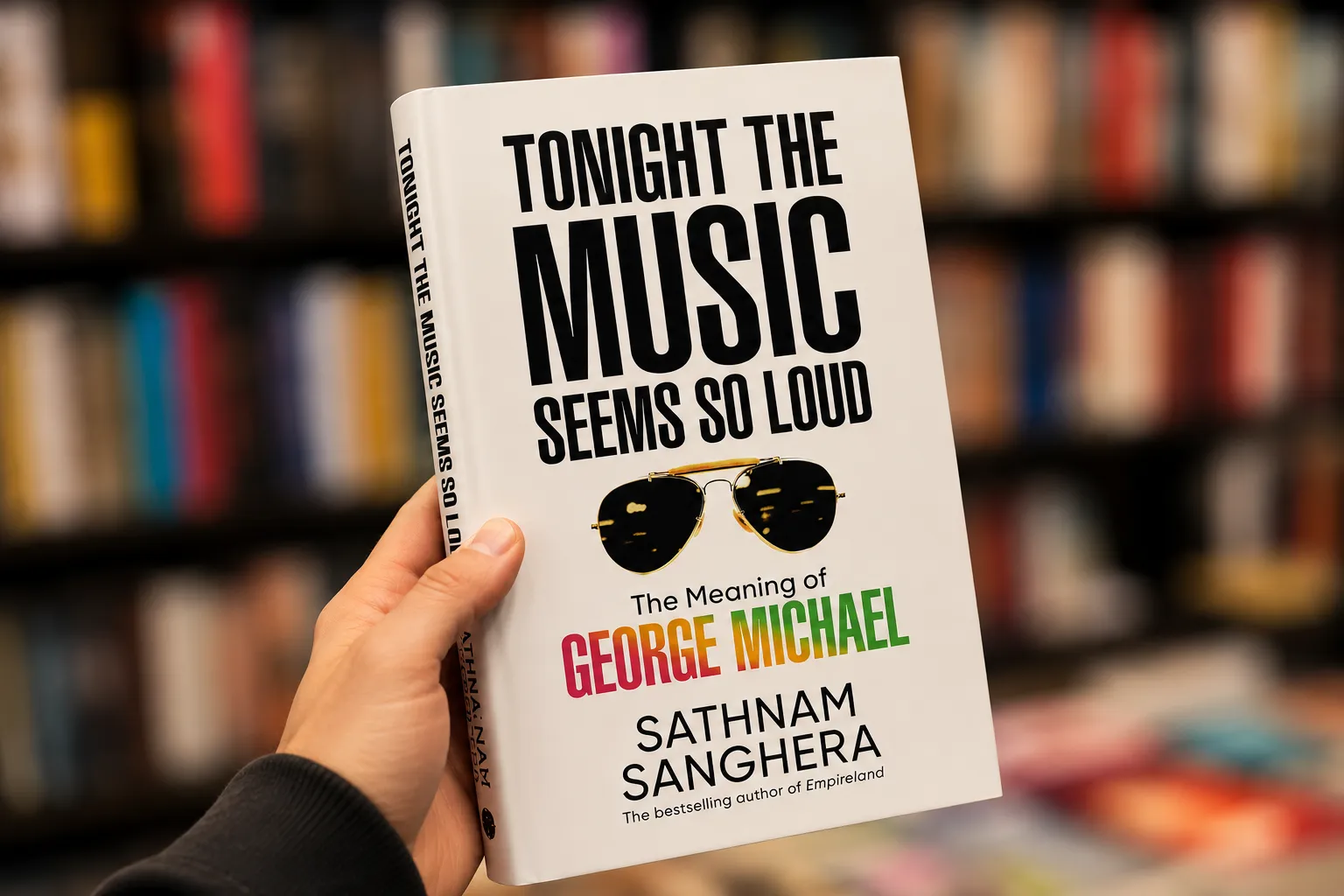
Book Review: Tonight the Music Seems So Loud: The Meaning of George Michael by Sathnam Sanghera
George Michael has sold more than 120 million records, created some of the most enduring pop songs of the last four decades, and remains one of Britain's most beloved musical figures. Yet as author Sathnam Sanghera argues in Tonight the Music Seems So Loud: The Meaning of George Michael, the singer has rarely received the same level of serious cultural examination afforded to artists such as David Bowie, Bob Dylan, or John Lennon. Sanghera's new book seeks to correct that imbalance, delivering a thoughtful, deeply personal, and often moving exploration of Michael's life, music, and legacy.
Rather than writing a conventional cradle-to-grave biography, Sanghera approaches George Michael through a series of thematic essays that examine the singer's career from multiple angles. The result is a book that feels part biography, part cultural history, part memoir, and part social commentary. Sanghera openly acknowledges his lifelong admiration for Michael, and that personal connection gives the book an emotional authenticity that distinguishes it from many traditional music biographies. At the same time, he does not shy away from discussing Michael's contradictions, struggles, and flaws.
One of the book's greatest strengths is its examination of Michael's background as the son of a Greek-Cypriot immigrant. Sanghera argues that Michael's experiences as the child of immigrants shaped everything from his work ethic to his understanding of identity and belonging. The author explores how Michael's upbringing influenced his perfectionism, ambition, and relentless pursuit of success. These themes become particularly compelling as Sanghera draws parallels between Michael's life and broader discussions about immigration, multicultural Britain, and social acceptance.
The book also challenges the common perception of George Michael as simply a pop star. Sanghera repeatedly highlights Michael's remarkable musical abilities, noting that he could barely read music, yet often composed hit songs in a matter of hours and played multiple instruments on his recordings. Michael's ability to blend pop, rock, soul, and R&B helped make him one of the most versatile artists of his generation. Sanghera presents a convincing argument that Michael's musical talents have frequently been underestimated because of his celebrity status and tabloid notoriety.
Another major focus of the book is Michael's complicated relationship with fame. Throughout his career, he simultaneously craved success and resented the pressures that came with it. Sanghera explores Michael's legal battles with record labels, his frustrations with the music industry, and his desire to be taken seriously as an artist rather than merely a celebrity. The book paints a portrait of a man who spent much of his life struggling to reconcile public expectations with his private identity.
The chapters dealing with sexuality and homophobia are among the book's most powerful. Sanghera carefully examines the hostile social climate of the 1980s and 1990s, explaining why Michael felt compelled to remain closeted for much of his career. Rather than judging Michael's choices through a modern lens, the author provides important context about the cultural and media pressures faced by LGBTQ+ public figures during that era. These sections offer valuable insight into both Michael's personal struggles and the broader social attitudes of the time.
Sanghera also devotes considerable attention to Michael's generosity and philanthropy. While much of the media focused on scandals and controversies, Michael quietly supported numerous charitable causes and often helped individuals in need without seeking publicity. These stories help balance the narrative and remind readers that there was far more to George Michael than the headlines often suggested.
Perhaps the most heartbreaking portions of the book concern Michael's later years. Sanghera explores the singer's struggles with addiction, declining health, and increasing isolation. Rather than sensationalizing these issues, he approaches them with empathy and compassion. The result is a nuanced portrait of a deeply talented artist whose final years were marked by personal challenges that often remained hidden from public view.
Critics have largely praised the book for its intelligence, warmth, and originality. Kirkus Reviews called it "a spirited and nuanced portrait of a complex pop icon," while numerous reviewers have highlighted Sanghera's ability to combine cultural analysis with genuine affection for his subject. Several commentators have noted that the book succeeds not only as a study of George Michael but also as a broader exploration of fame, identity, sexuality, race, and modern British culture.
Ultimately, Tonight the Music Seems So Loud succeeds because it treats George Michael as both an extraordinary musician and a complicated human being. Sanghera never attempts to present Michael as a saint, nor does he reduce him to his mistakes. Instead, he offers a balanced, insightful, and deeply engaging examination of an artist whose influence continues to resonate nearly a decade after his death. For longtime fans, the book provides fresh perspectives on a beloved performer. For newer readers, it serves as a compelling introduction to one of pop music's most fascinating figures.
Rating: 4.5/5 Stars