Spotify and Universal Explore AI Covers and Remixes in New Premium Push
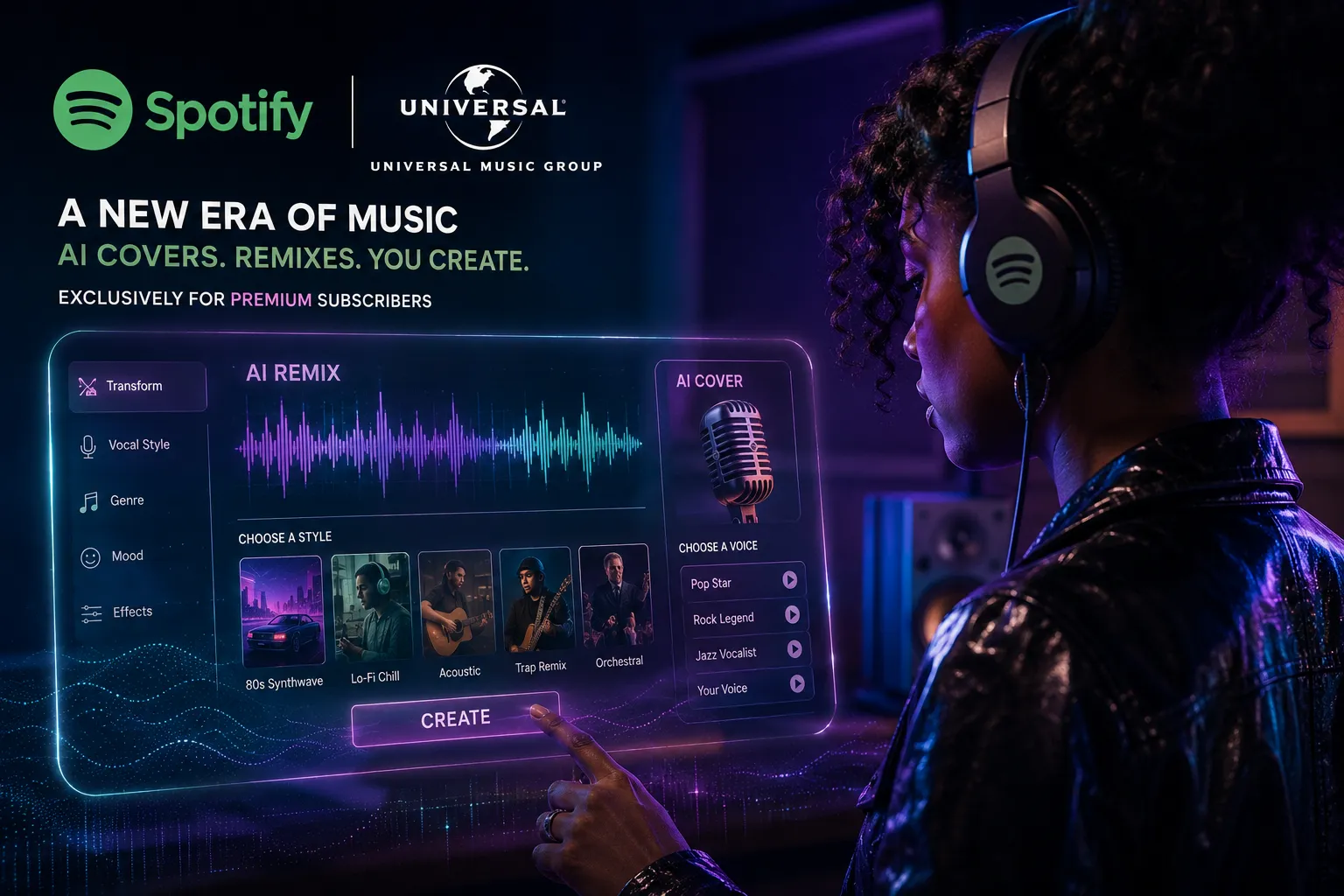
The future of music streaming may be shifting from passive listening toward active participation. Spotify and Universal Music Group have reportedly reached a landmark agreement that could allow subscribers to create AI-generated covers, alternate versions, and remixes of songs through premium paid features — a move that signals one of the music industry's clearest attempts yet to bring generative AI directly into mainstream listening experiences.
According to reports, the proposed system would allow fans to interact with music in entirely new ways. Rather than simply pressing play, users could potentially generate alternate vocal performances, create personalized versions of tracks, experiment with stylistic changes, or produce AI-powered remixes built from licensed material.
The significance of the deal extends far beyond novelty. AI-generated music has increasingly become one of the industry's most controversial battlegrounds. Record labels, artists, and technology companies have spent the past several years wrestling with major questions surrounding copyright, voice rights, ownership, royalties, and how artificial intelligence should interact with creative work.
Unlike earlier AI platforms that often faced accusations of using copyrighted music without permission, Spotify and Universal appear to be moving toward a licensed ecosystem. That distinction matters. Instead of AI existing outside traditional music structures, labels increasingly seem interested in bringing the technology inside the system and monetizing it directly.
The shift could fundamentally alter what it means to be a music fan.
Historically, listeners consumed finished songs exactly as artists released them. The remix era expanded that slightly. Social platforms accelerated user-generated content. But AI introduces a much larger leap: music becoming interactive.
A fan could theoretically hear a favorite song sung in an entirely different style. A classic rock track could transform into a synth-heavy electronic version. A pop single might become a stripped-down acoustic performance generated instantly through prompts and customization tools.
Supporters argue these systems could unlock new forms of creativity and fan engagement. Critics remain cautious. Questions surrounding compensation, artist consent, deepfake concerns, and creative ownership remain unresolved throughout much of the industry.
The move also arrives during an increasingly crowded AI music race. Platforms across the industry continue experimenting with generation tools, AI voice systems, and creator products designed to blur the line between listener and producer.
And yet the biggest question may be simple:
Will fans actually want AI versions of songs... or will they still prefer the original human imperfections that made them love music in the first place?
If this partnership moves forward, Spotify may soon be putting that question directly in front of millions of listeners.