Music Industry Leaders Bring Tariff Concerns to Washington
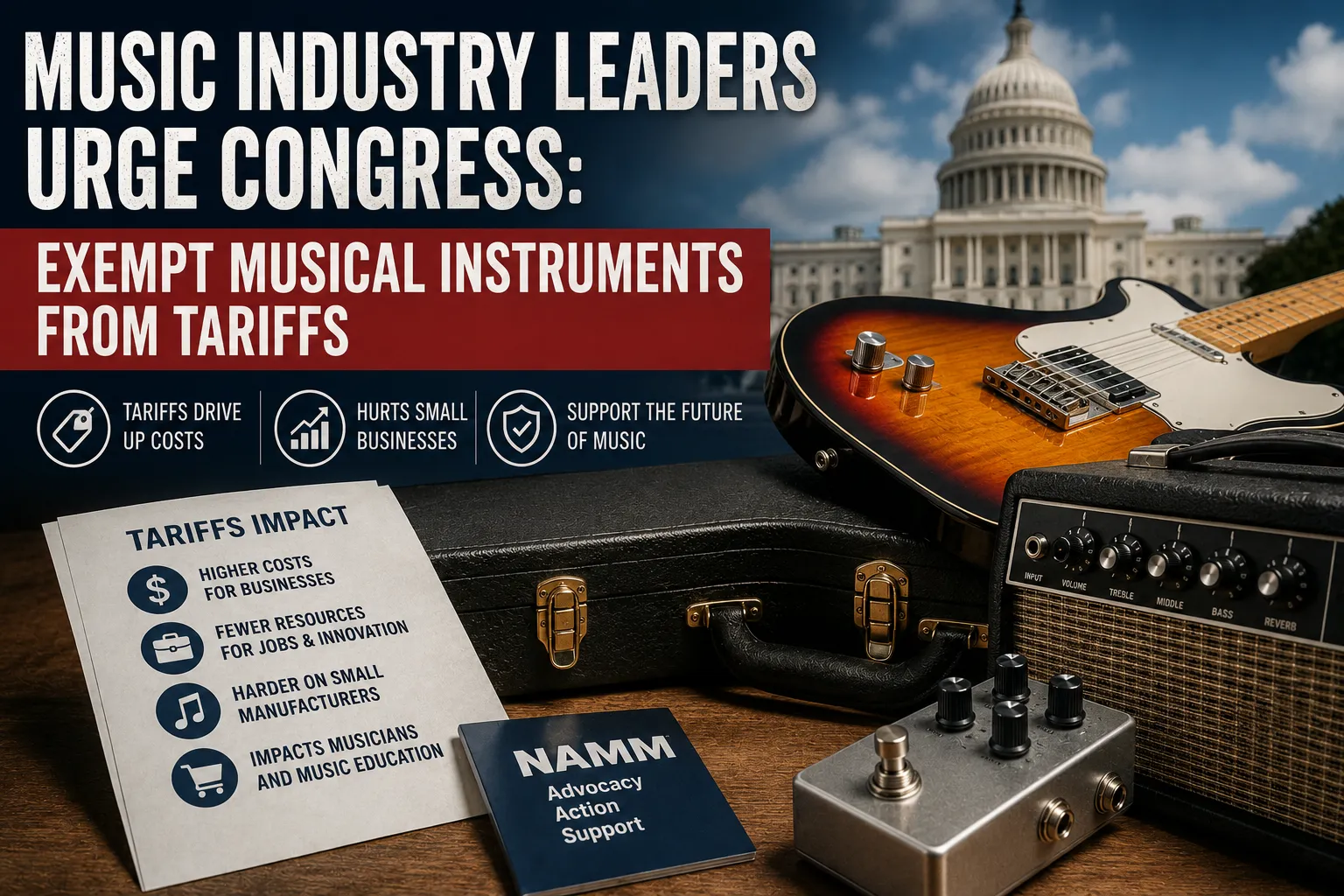
A delegation of music industry leaders traveled to Capitol Hill on May 13 with a message they say could have significant consequences for instrument makers, manufacturers, retailers, and musicians across the United States. Representatives from the music products industry, including executives and advocacy leaders from the National Association of Music Merchants (NAMM), met with members of Congress to urge lawmakers to exempt musical instruments and related products from current and potential future tariffs. The group also pushed for relief from existing trade policies that they argue are creating mounting financial pressure throughout the industry.
Among those participating in the meetings was John Mlynczak, who joined industry representatives in discussing the effects tariffs are having on businesses ranging from independent manufacturers to larger companies throughout the musical equipment ecosystem.
The concerns come as many manufacturers continue facing increased costs connected to tariffs implemented over the past year. Industry leaders argue that musical products occupy a unique position within manufacturing and retail, with supply chains often relying on internationally sourced components, electronics, raw materials, and specialized parts that can be difficult—or in some cases impossible—to fully replace through domestic alternatives.
One of the clearest examples presented during the Capitol Hill discussions came from Julie Robbins, who traveled from Ohio to share the experience of her company, boutique effects pedal manufacturer EarthQuaker Devices. Robbins explained that tariffs have already produced substantial financial consequences for the business.
According to Robbins, EarthQuaker Devices has spent more than $100,000 on tariffs since April 2025 alone. The additional costs, she argued, represent resources that otherwise could have been invested in employee growth, innovation efforts, and expansion opportunities within the company.
For smaller manufacturers especially, tariff increases can create difficult decisions. Companies often face pressure to absorb higher costs internally, raise prices for consumers, reduce margins, or delay investments in hiring and product development. Boutique music gear makers can be particularly vulnerable because they frequently operate with tighter budgets and rely heavily on specialty components sourced globally.
Industry representatives also warned that the impact may eventually extend beyond manufacturers themselves. Higher production costs can ripple throughout the music economy, affecting retailers, touring musicians, educators, recording studios, and consumers purchasing instruments or equipment.
The broader discussion reflects increasing concern over how trade policy intersects with creative industries. While tariffs are often designed to strengthen domestic manufacturing or address broader economic priorities, music industry leaders argue that instruments and music technology products represent a distinct category with educational, artistic, and cultural significance.
NAMM has long advocated for music businesses through federal policy efforts and has increasingly focused attention on economic issues affecting manufacturers and retailers. The organization's latest trip to Washington suggests tariffs may become one of the industry's most urgent policy conversations moving forward.
Whether lawmakers ultimately provide exemptions remains uncertain, but industry leaders hope direct discussions with Congress help illustrate the practical effects tariff costs are having on businesses operating far from traditional manufacturing sectors. For companies like EarthQuaker Devices, the debate is no longer theoretical—it has become a question of where resources go and how future growth decisions get made.