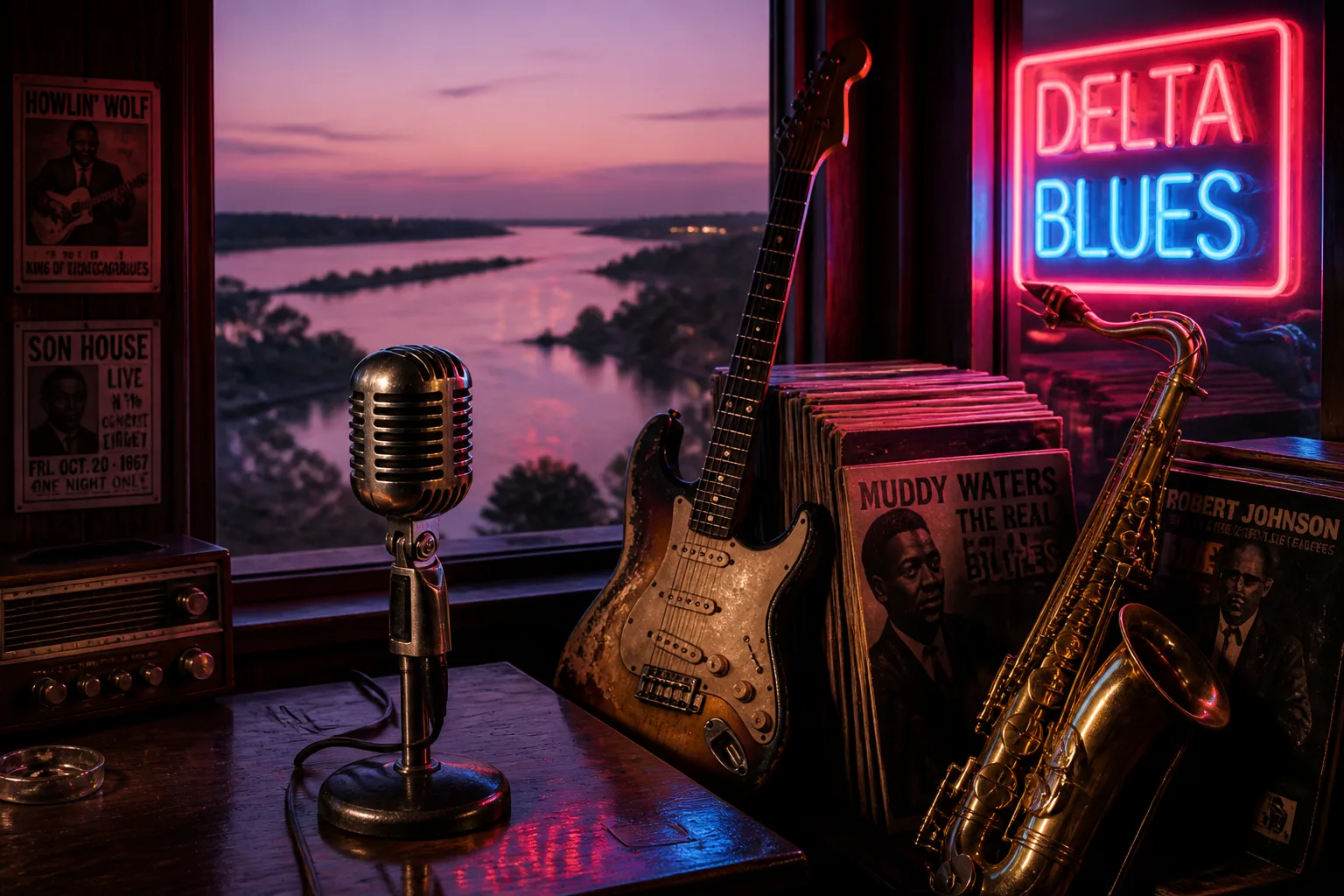
Memphis: The City That Built the American Sound
From the banks of the Mississippi to the neon glow of Beale Street, Memphis has long been a living laboratory for American music. A recent feature for the America 250 celebration, published in early 2026, charts how the city’s river‑front position, post‑Civil War growth, and mosaic of cultural influences forged a sound that still reverberates worldwide.
The story starts in the 1860s, when Memphis became a refuge for freed people seeking new opportunities. Rapid expansion created a demand for professional musicians, and by the 1870s trained African‑American artists were performing throughout the city. They blended European string traditions, Irish and Scottish ballads, and African rhythms. Historian G. Wayne Dowdy notes that this fusion produced what would later be called the Memphis sound.
Beale Street soon emerged as a commercial and cultural hub, its Black‑owned businesses and juke joints nurturing blues. The convergence of blues, gospel from local churches, and rural rockabilly set the stage for the first true rock and roll record. In 1951, Sam Phillips recorded “Rocket 88” by Jackie Brensto and His Delta Cats at his Memphis studio for Chess Records. Executive Director Pat Mitchell Worley of the Soulsville Foundation calls the track “the first rock ’n’ roll song,” acknowledging that while other cities claim the title, music historians agree on the 1951 recording.
A few years later, Elvis Presley entered Phillips’ Sun Studio and launched a career that would bring rock and roll to a national audience. Sun Records, founded by Phillips in 1952, became a launching pad for white artists who drew heavily from African‑American rhythm and blues. The studio’s early catalog also included Johnny Cash, Jerry Lee Lewis, and Roy Orbison.
In the same neighborhood, Stax Records at 926 E. McLemore pioneered soul music. Owner Jim Stewart worked closely with Director of Promotions Al Bell to create an integrated studio environment. Booker T. and the M.G.’s, the house band, featured both Black and white musicians. Mayor Paul Young remarks that during a period of national racial division, Stax “had people at Stax Records, Black and white, making music together and doing and creating sounds that really, you know, you have to see to believe.”
Stax’s influence extended beyond the studio. Isaac Hayes’ “Theme from Shaft,” recorded at Stax, earned two Grammys and an Oscar, making Hayes the first Black artist to win an Oscar in a non‑acting category. In 2006, Memphis‑based Three 6 Mafia and Frayser Boy wrote “Hard Out Here for a Pimp,” which won an Oscar for its inclusion in the film Hustle and Flow, directed by Craig Brewer, a Memphis native.
Today, Memphis remains a music mecca. Royal Studios, located just a mile from Stax, continues to produce hits, including the 2014 Mark Ronson and Bruno Mars collaboration “Uptown Funk.” The city’s ongoing output spans gospel, blues, hip‑hop, R&B, and soul, keeping the Memphis brand alive on the global stage.
The feature underscores that Memphis’s musical heritage is not merely a historical footnote but an active, evolving force. By blending diverse traditions, fostering collaboration across racial lines, and nurturing talent in iconic studios, the city has produced a sound that has shaped American music for over a century. As part of the America 250 celebration, the article highlights how Memphis’s contributions—from the Mississippi River’s influence to the birth of rock and roll—continue to resonate, reminding listeners that the city’s musical legacy remains a living, breathing part of the national cultural fabric.