This Day in Music History — May 25
May 25 has delivered an unusually eclectic collection of moments across music history — spanning rock legends, chart milestones, television moments, cultural shifts, and major events that helped shape entire eras. Some dates become memorable because of one huge story. May 25 somehow accumulated several.
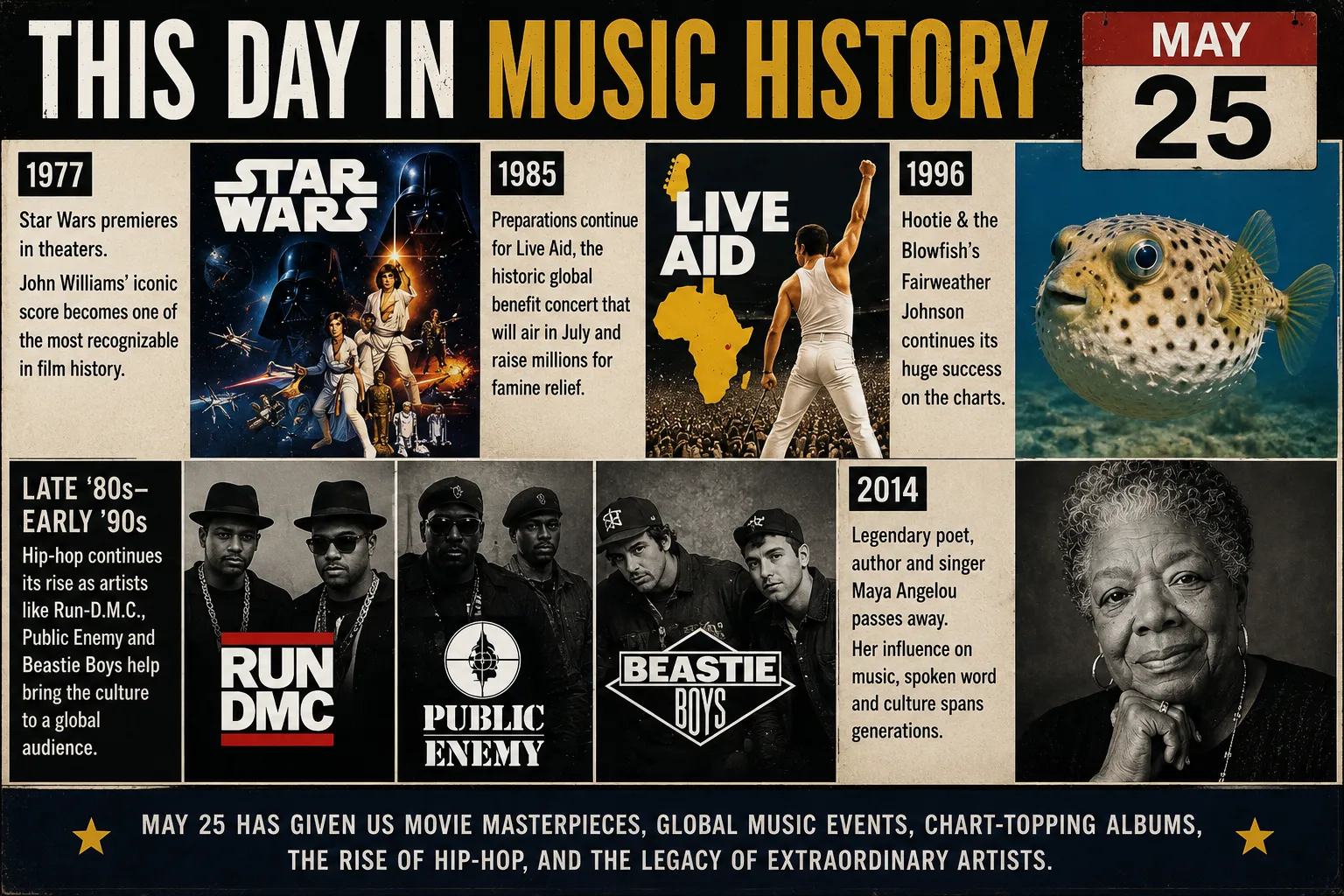
On May 25, 1977, one of the biggest entertainment events in history exploded into theaters when Star Wars premiered. While remembered primarily as a film milestone, its impact on music became enormous. Composer John Williams created one of the most recognizable orchestral scores ever recorded, helping revive mainstream interest in large cinematic compositions and influencing generations of musicians and producers. The soundtrack itself became a cultural event, proving that instrumental music could become central to pop culture.
May 25, 1985 marked a major milestone for charity concerts and large-scale music events with continued global attention surrounding Live Aid preparations. The event itself would later become one of the most important music broadcasts ever staged, helping redefine what global music events could accomplish.
On May 25, 1996, Hootie & the Blowfish reached another major commercial peak as Fairweather Johnson continued dominating sales conversations during one of the largest periods of post-grunge radio success. The mid-1990s represented a moment where alternative and roots-influenced rock occupied huge sections of mainstream radio.
May 25 also falls close to several defining moments involving hip-hop's rise during the late 1980s and early 1990s. During this period artists like Run-D.M.C., Public Enemy, and Beastie Boys helped transform rap from local culture into a worldwide force. By the time the calendar reached late May each year, radio stations increasingly shifted toward summer records that often defined entire generations.
May 25, 2014 brought major headlines following the death of legendary poet and singer-songwriter Maya Angelou. While globally celebrated as a writer and activist, Angelou also carried deep connections to music, spoken word, performance, and artistic culture throughout her life.
Rock history also has a habit of clustering around late May. Throughout multiple decades artists often launched major tours, festival appearances, and summer album campaigns during this period. Labels historically viewed Memorial Day weekend as a starting line for what became one of music's most important seasonal windows.
Long before streaming playlists and algorithmic recommendations, summer itself mattered enormously to the industry. Radio stations shifted formats, labels pushed anticipated releases, MTV changed rotations, and audiences prepared for concert season. Certain songs seemed designed specifically for late May and early June. Entire careers occasionally changed because of timing.
Music history rarely moves in straight lines.
Some dates belong to one artist.
Some belong to one album.
Others quietly gather pieces of multiple eras at once.
May 25 became one of those dates.