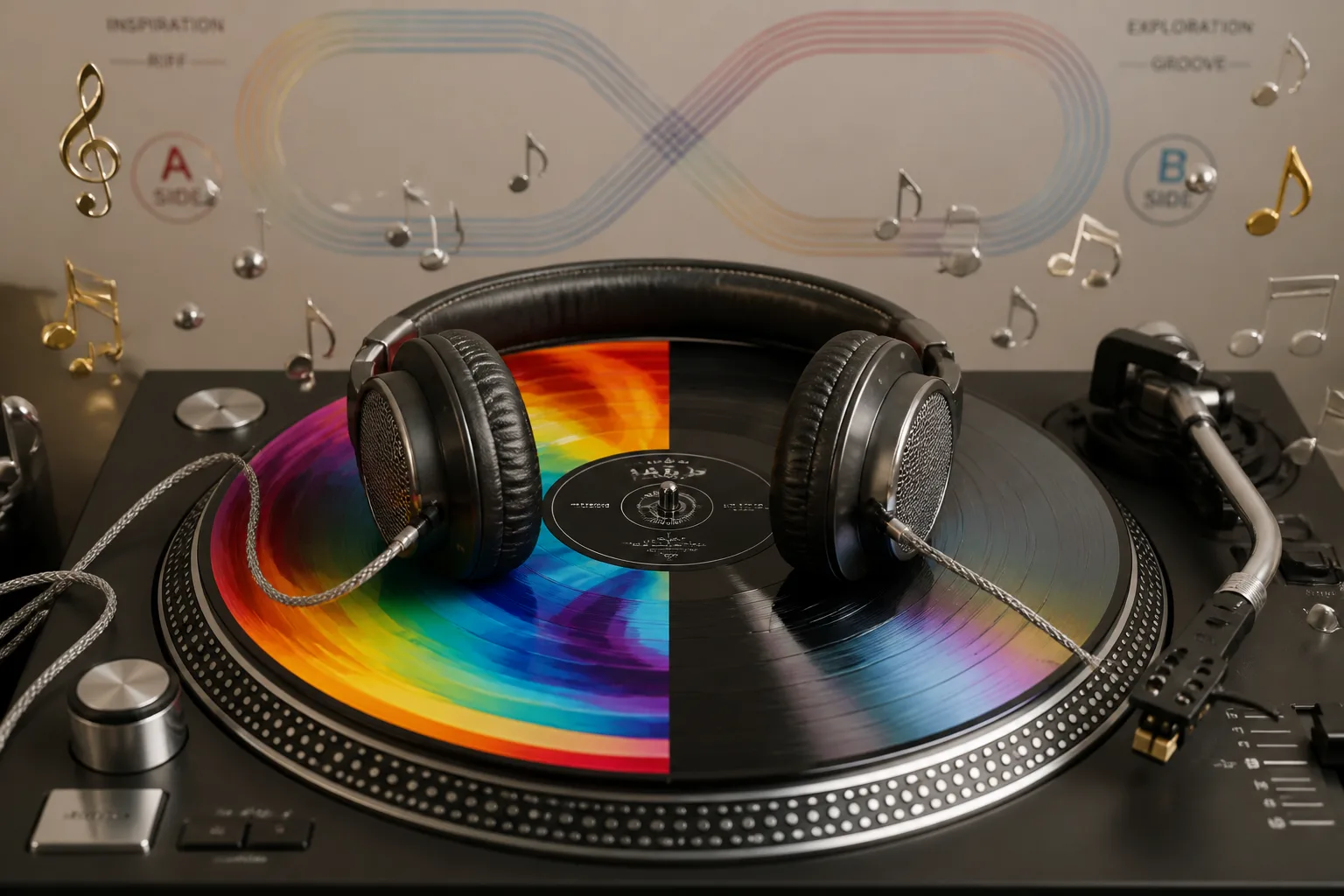
Brian Wilsons Modular Recording Revolution: How Good Vibrations Shaped Modern Studio Production
When the Beach Boys’ Brian Wilson laid down the 1966 single "Good Vibrations," he didn’t merely add another chart‑topper to the catalogue; he rewrote the very architecture of studio work. By dissecting songs into isolated “modules” and reassembling them on tape, Wilson produced a track that would set a new standard for precision and flexibility in pop music.
Wilson’s modular approach blossomed amid a mid‑1960s studio renaissance. While the Beatles were collaborating with George Martin, Wilson was already probing the limits of what a recording space could offer. Instead of capturing a full band performance and layering a handful of overdubs, he recorded each part separately—sometimes with a single instrument, sometimes in small ensembles—and then physically cut and spliced the tape by hand. The process demanded more than 90 hours of tape for "Good Vibrations," a figure that underscores the massive amount of material Wilson sifted through to craft the final version.
The result was a song that defied conventional pop structure. Abrupt shifts in texture, unconventional instrumentation—bicycle bells, tin cans, a theremin‑like device—and a “pocket symphony” arrangement that fused vocal layers with orchestral elements all coalesced into a sonic tapestry. According to the Good Vibrations Wikipedia entry, the track’s production cost was estimated in the tens of thousands of dollars, making it the most expensive pop single of its era.
Wilson did not stop with a single. The same modular methodology underpinned the Beach Boys’ 1966 album Pet Sounds, recorded largely between January and April of that year. The record incorporated a broad palette of instruments—from strings and brass to quirky sound effects—and leaned heavily on session musicians such as the Wrecking Crew. Pet Sounds is widely regarded as one of the first concept albums in pop music, and its production cost exceeded $70,000—a figure that would translate to roughly $690,000 in 2025 dollars.
Beyond instrumentation, Wilson’s experimentation extended to vocal arrangements. He blended multiple takes of harmonies, employing choral techniques that were unusual for a rock band at the time. Songs such as "God Only Knows" showcase this layered approach, creating a “spine‑tingling” effect that music historians cite as a precursor to modern vocal processing.
The influence of Wilson’s modular recording can be traced to the rise of digital audio workstations (DAWs) that allow producers to cut and paste musical fragments with ease. While Wilson’s original process involved physically cutting tape and splicing it together, the underlying principle—using the studio as an instrument rather than merely a recording space—has become a staple in contemporary production.
Wilson’s career after the mid‑1960s was marked by personal challenges, including mental health struggles that led him to withdraw from touring. He released a solo single, "Caroline, No," in 1966 and worked on the unfinished album Smile, which was later completed in 2004. He remained a respected figure in music until his death in 2025, when he was described as an icon and one of the most important figures in popular music.
Today, the techniques pioneered by Wilson continue to inform producers and engineers. Modern pop and rock recordings routinely employ modular recording, intricate vocal layering, and unconventional instrumentation—practices that trace back to Wilson’s work in the 1960s. His legacy endures not only in the Beach Boys’ catalog but also in the broader evolution of music production.