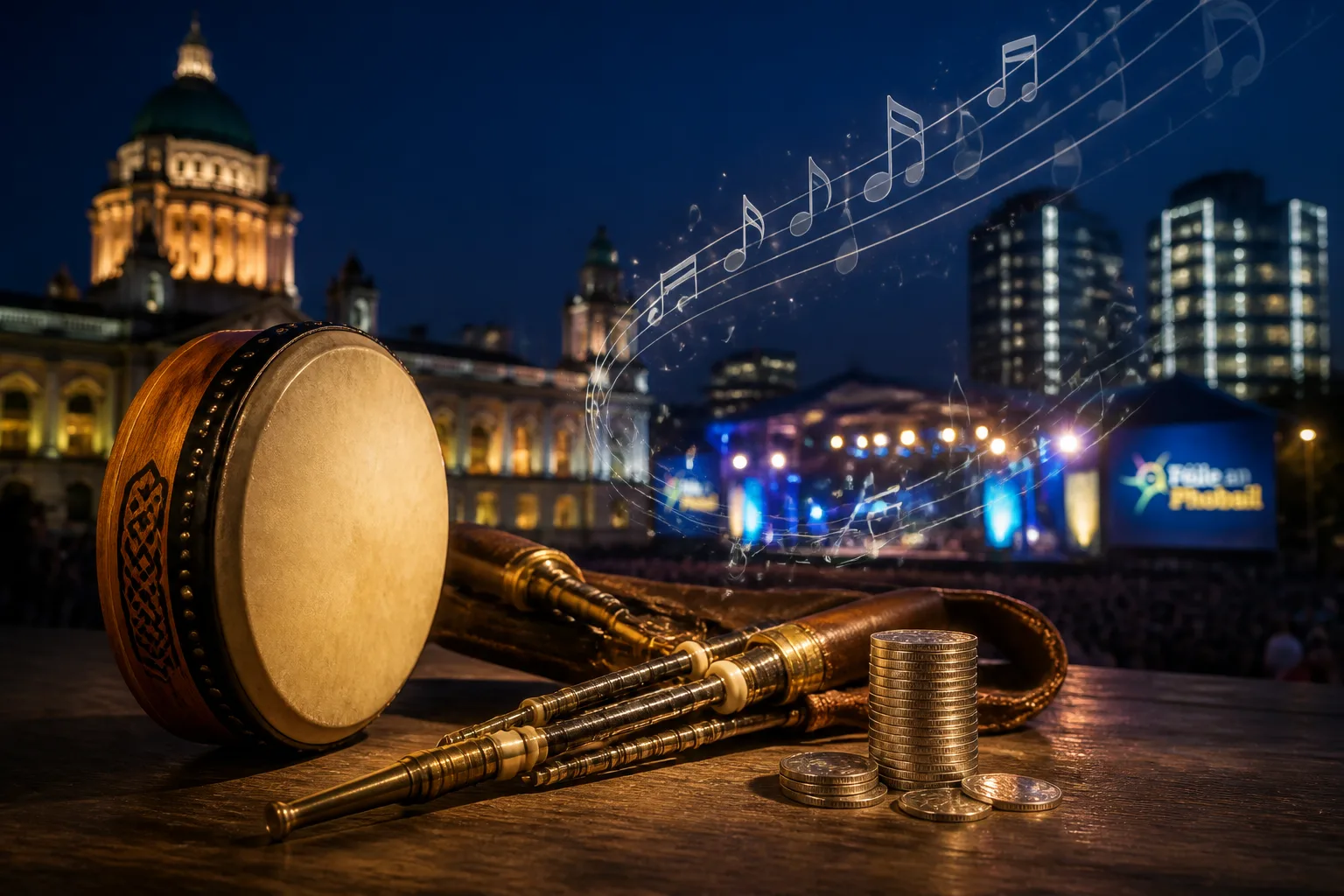
Belfast Hosts First Fleadh Cheoil na hEireann, Drawing 900,000 Visitors and Economic Boost
Belfast’s streets rang with the sound of a 1,000‑year‑old tradition as the world’s largest Irish traditional music festival, the Fleadh Cheoil na hÉireann, opened in the city on Sunday, 2 August. The week‑long event, which closed on 9 August, drew an estimated 900,000 visitors to the city centre – a figure that eclipsed organisers’ original forecast of 800,000 and set a new attendance record for Northern Ireland.
The economic impact was projected at £53 million by Belfast City Council, Comhaltas Ceoltóirí Éireann (CCÉ) and Ards CCÉ. On Friday, the Department for the Economy announced that the forecast was likely to be surpassed, citing the higher‑than‑expected footfall recorded by the Belfast One Business Improvement District.
In addition to the main competition, the festival staged a series of street performances and pop‑up fringe events across the city. The All‑Ireland competitions attracted 5,000 musicians and dancers from 22 countries, and the programme included a concert by the intercultural music‑integration project Tunes Translated.
Tunes Translated, founded by ESOL teacher and musician Catherine Crean, brings together migrants, refugees and asylum seekers with the indigenous population of Belfast. The group’s Saturday concert, held at 2 Royal Avenue, featured 22 different nationalities performing together. Crean said the band uses “indigenous and international music” to create a shared experience. “Music is such a powerful tool for integration as it is a universal language,” she explained.
The concert highlighted tunes from the participants’ home countries. Iranian pianist and guitarist Shayan Kargaran, who has been part of the group for several years, said he had learned Irish music during the festival. “It’s been brilliant learning Irish music, very beautiful – I love the music. Since the day I listened to it I’ve loved it,” he told the audience.
Northern Irish fiddler Susan Curran, a Tunes Translated member for three years, praised the project’s inclusivity. “It has given me such an appreciation for the beautiful music that is coming from Iran, Sudan, Somalia and Palestine,” she said. “Music is such a universal thing – there are challenges in learning the different beats and lilts, but it’s an eye‑opener and your ear almost has to do a little different job.”
The festival’s success has been noted by local authorities. Belfast City Council’s mayor, Tracy Kelly, welcomed the influx of visitors and the cultural exchange fostered by the event. The Department for the Economy’s statement that the economic boost would exceed £53 million underscores the festival’s importance to the region’s tourism and hospitality sectors.
As the festival continues, organisers are monitoring attendance and economic indicators to assess the long‑term impact on Belfast’s cultural profile. The Fleadh Cheoil na hÉireann is scheduled to conclude on 9 August, after which the city will host a debriefing to evaluate visitor satisfaction and economic outcomes.
The event demonstrates how a traditional music festival can serve as a platform for cultural integration and economic development, bringing together diverse communities and stimulating local businesses.