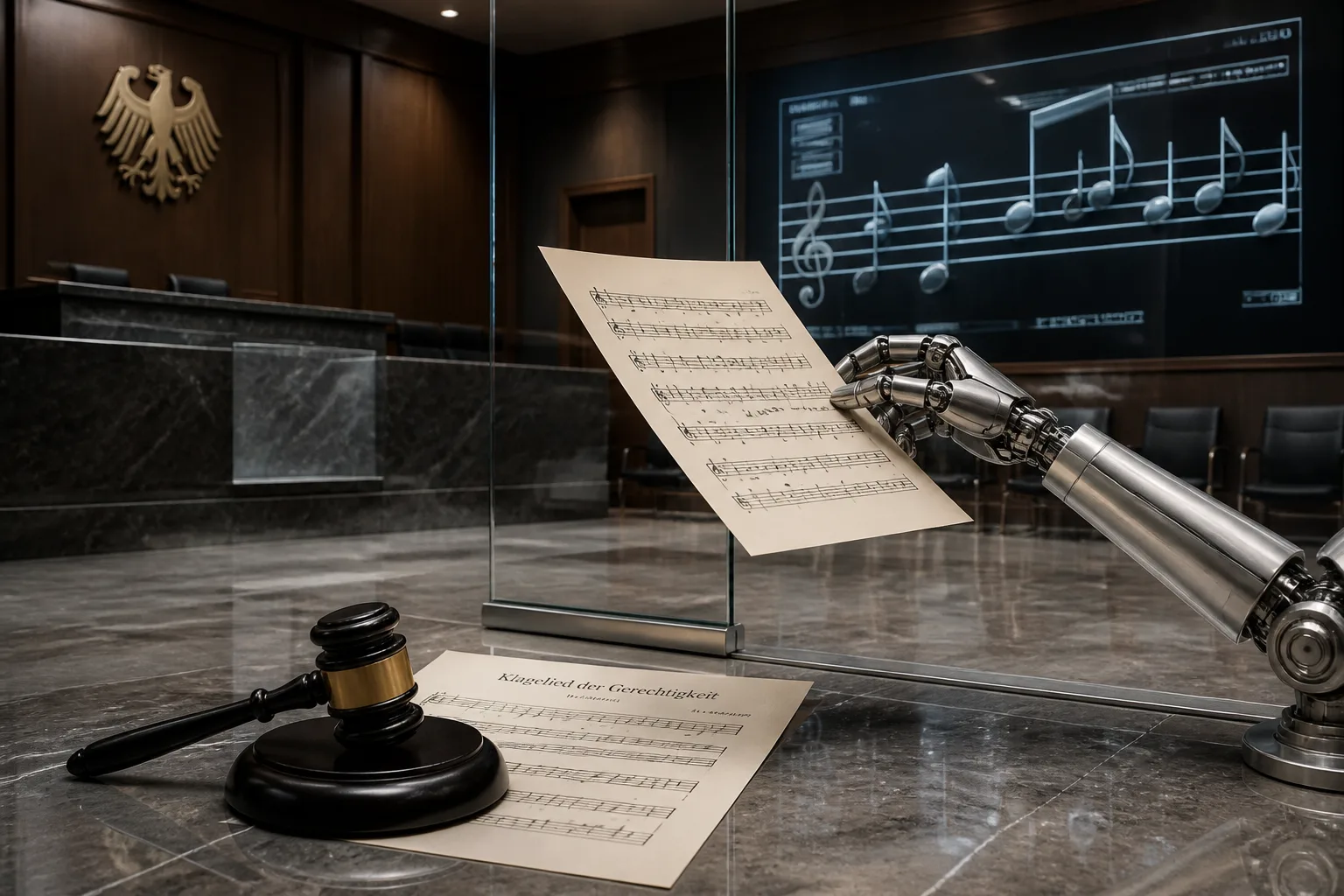
German Court Rules AI-Music Platform Suno Infringed GEMA-Protected Songs, Highlights Need for Transparency
When a Munich court delivered its verdict on July 31 2026, it didn’t merely penalise a single AI‑generated track—it set a precedent that will reverberate across the global music‑tech landscape.
The Munich regional court found that U.S.‑based AI music generator Suno had infringed the copyrights of six German‑protected compositions. The ruling ordered Suno to stop using the disputed songs, disclose its revenue streams tied to the offending tracks, and pay damages. The decision follows a lawsuit filed by Germany’s largest royalty‑collecting society, GEMA, which alleged that Suno’s generative model replicated recognizable musical elements from Forever Young and Big in Japan by Alphaville, Atemlos durch die Nacht, Mambo No. 5, Rasputin, and Daddy Cool.
GEMA generated the contested tracks through Suno’s platform and leveraged audio‑fingerprinting techniques to demonstrate striking similarity to the original works. The society argued that the model had reproduced the protected material without authorization, thereby infringing the composers’ rights.
Suno countered that none of the songs were stored in its training data and that the level of similarity was insufficient to constitute infringement. The company also claimed that responsibility lay with users who entered the prompts. Nonetheless, the court held Suno liable for the unauthorized reproduction, noting that the model’s outputs could be traced back to the copyrighted material. Suno’s challenge to the court’s jurisdiction—citing that the model was trained in the United States—was rejected, and the case proceeded under German law. Importantly, the ruling does not ban Suno nationwide nor declare that every track generated by the platform infringes copyright; the case remains open to appeal.
The decision underscores a broader industry dilemma: AI tools are now woven into every stage of music creation—from songwriting and production to vocal synthesis, mastering, distribution, and promotion—yet there is no reliable way to determine how much of a finished track is human‑crafted versus machine‑generated. Without that information, artists and rights holders cannot verify whether a piece uses their work, whether permission was obtained, or who should receive credit or payment. The Suno ruling forces AI companies to confront this transparency gap.
In the electronic‑music sector, AI is already embedded in everyday workflows. Software such as Serato Stems and rekordbox can isolate vocals, bass, drums, and melodies from a finished track, while producers employ AI‑assisted tools for sample organization, vocal cleanup, mastering, and early demo development. Public figures such as deadmau5 and Diplo have praised AI as a production aid, and David Guetta played an AI‑generated Eminem vocal in 2023, noting that it would not receive an official release. Grimes has offered an authorised AI voice model through Elf.Tech, allowing musicians to use her voice under a royalty‑sharing agreement. These examples illustrate that the critical issue is not merely whether AI is involved, but whether the artist or rights holder is aware of, approves, and has an agreement in place for the use of AI‑generated material.
The Suno decision highlights the need for a verifiable disclosure system. A meaningful disclosure would identify where AI entered the creative process and what training data were used. Verification would require evidence that the claims could be checked by labels, distributors, platforms and rights holders. Without such a system, producers who use AI for technical assistance can be conflated with those releasing largely AI‑generated music without explanation, while artists whose voices or compositions appear in an output are left to prove that their work was used.
Industry observers note that the ruling could influence how AI‑music companies structure their licensing and data‑usage policies. The case also adds pressure on music‑rights societies to develop tools that can detect AI‑generated content and assess its compliance with copyright law. While the court’s order does not create a blanket ban on AI‑generated music in Germany, it signals that companies must demonstrate compliance with copyright requirements and provide transparent information about the origin of their outputs.
At present, Suno must comply with the court’s directives, and the case remains pending appeal. The ruling does not alter the status of other AI‑music platforms or the broader debate over AI’s role in music creation, but it establishes a legal precedent that AI‑generated content can be held accountable for infringing copyrighted works when those works can be identified in the output.
The outcome will likely prompt further scrutiny of AI training data, licensing practices and disclosure requirements across the global music industry, as stakeholders seek to balance innovation with the protection of creators’ rights.